

TL;DR
A road rage accident lawyer in California can help injured drivers understand their legal options after an intentional crash or violent driving incident. California law allows victims to pursue compensation when another driver’s reckless or intentional conduct causes injury.
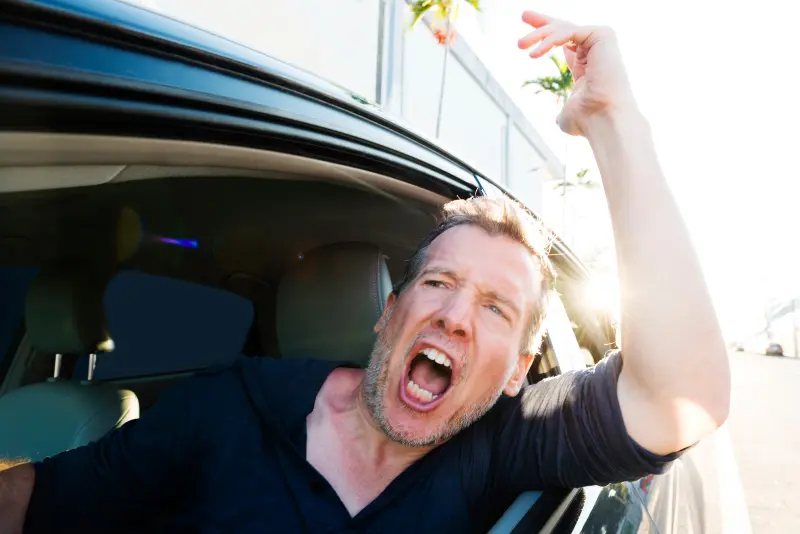
A driver cuts you off. You honk. They slow down, brake hard, and refuse to let you pass. Then, without warning, they slam into your vehicle.
What started as a minor traffic dispute has become something much more serious. And who pays for the injuries, medical bills, and lost income that follow?
At Blair & Ramirez LLP, we understand that a serious car accident can affect every part of your life. Our Los Angeles personal injury team represents people injured in motor vehicle accidents and helps them understand their rights under California law. When anger turns into violence on the road, victims deserve clear answers about their legal options.
1. Road Rage vs. Aggressive Driving Legal Difference
Not every aggressive driver commits road rage. But when someone uses a vehicle to threaten, intimidate, or deliberately hurt another person, the situation becomes much more serious.
Aggressive driving often involves speeding, tailgating, cutting off other motorists, or ignoring traffic signals. Road rage goes further. It can involve threats, physical attacks, deliberate collisions, or even gunfire.
Consider a driver who follows another vehicle through several streets after an argument. That behavior raises different legal concerns than someone who simply changes lanes without signaling.
California Vehicle Code sections 23103 and 23109 address reckless driving and speed contests. The facts determine which laws apply.
A recent example comes from Stevenson Ranch. On September 29, 2026, a man allegedly exited his vehicle and struck a woman during a road-rage incident. The California Highway Patrol sought help identifying him. Authorities had not released details about her injuries.
A relevant published decision is People v. Pierce (2025). The California Court of Appeal examined a driver’s conduct in a fatal DUI crash. The defendant faced convictions that included second-degree murder and vehicular manslaughter. The published portion addressed the evidence needed to establish implied malice.
The case did not involve road rage. But it shows an important point: California courts examine the driver’s actions and awareness of the danger when deciding whether conduct crosses into serious criminal wrongdoing.
For an injured motorist, the distinction matters because criminal charges and civil injury claims serve different purposes.
2. What Can You Recover in a Road Rage Injury Lawsuit?
A road rage injury lawsuit can seek compensation for losses caused by another driver’s wrongful conduct.
But what counts as a loss? Is it only the hospital bill? What about months of missed work, ongoing therapy, or the emotional impact of a violent collision?
California personal injury claims can include several types of damages.
| Type of damages | What it covers |
|---|---|
| Medical expenses | Emergency care, surgery, medication, and rehabilitation |
| Lost income | Wages lost during recovery |
| Future medical costs | Ongoing treatment and long-term care |
| Pain and suffering | Physical pain and emotional distress |
| Property damage | Vehicle repairs or replacement |
| Loss of earning capacity | Reduced ability to earn income in the future |
The facts behind each claim matter. Medical records, employment documents, repair estimates, and expert opinions can help establish the losses.
Consider a recent incident in Palmdale. On October 4, 2026, Kelton Mendoza, 32, suffered fatal gunshot wounds after an apparent confrontation involving two vehicles. A witness described the incident as possible road rage, but the Los Angeles County Sheriff’s Department had not confirmed that motive. Authorities sought information about the shooting on October 26.
Another relevant decision is Gilliland v. City of Pleasanton (2025). Melanie Gilliland suffered serious injuries when an 18-year-old driver ran a red light and struck her vehicle while an officer followed him. She sued the driver and the city.
The appellate court examined whether the city’s pursuit immunity applied. It rejected the trial court’s interpretation of the law and addressed the difference between an actual and perceived police pursuit.
This was not a road-rage lawsuit. Still, it highlights why identifying every potentially responsible party matters in a serious crash.
3. When a Driver Deliberately Causes a Collision
A driver who intentionally hits another vehicle creates a different legal situation from someone who causes an ordinary traffic accident.
The victim may have grounds for an intentional vehicle collision claim, depending on the evidence and the injuries involved.
California law recognizes intentional torts, including assault and battery. A driver who deliberately uses a vehicle to strike someone can face civil liability beyond an ordinary negligence claim.
A recent California case illustrates why evidence of intent matters.
In July 2026, California authorities announced that Kenneth Pham Tran, a San Jose driver, had received a criminal sentence after dashcam footage showed him initiating a road-rage incident involving a semi-truck. Investigators said he repeatedly brake-checked the truck, causing a collision. He later filed an insurance claim that misrepresented what happened.
A relevant appellate decision is State Farm Fire and Casualty Co. v. Diblin (2025). The case involved an intentional physical attack and a dispute over homeowners insurance coverage. The court examined whether the injuries arose from an accident under the policy and how the intentional-act exclusion applied.
Although Diblin did not involve a vehicle, it illustrates an important insurance principle: deliberately causing an injury can create coverage questions that do not arise in an ordinary accidental collision.
4. Can a Road Rage Shooting Victim File a Civil Lawsuit?
Yes. A person injured in a road-rage shooting can have grounds for a civil claim against the responsible person. If the victim dies, eligible family members may also have wrongful death options.
But what happens when the person responsible faces criminal charges? Does that prevent the family from pursuing compensation?
No. Criminal proceedings and civil lawsuits are separate legal processes. A criminal case focuses on punishment, while a civil case seeks financial compensation for the victim’s losses.
A recent Santa Monica case shows how serious these incidents can become.
On October 28, 2026, Santa Monica police announced the arrest of Manuel Reyes in connection with a fatal March shooting near Fourth Street and Olympic Drive. Police said the incident appeared to involve a road-rage confrontation between occupants of two vehicles. Reyes faced murder and attempted murder charges after investigators tracked him to Mexico and secured his return to the United States.
A useful insurance-related decision is Simone v. State Farm Mutual Automobile Insurance Co. (2025). Elijah Simone suffered catastrophic injuries when a car struck him while he rode his bicycle. The case later focused on the insurer’s handling of a settlement demand.
The California Court of Appeal examined whether State Farm had acted reasonably when it rejected a policy-limits settlement offer. The decision highlights the importance of fair insurance claim handling when serious injuries create substantial financial exposure.
The case was not a shooting or a road-rage dispute. Its relevance lies in the separate question of how an insurer handles a serious injury claim.
5. Does Insurance Cover an Intentional Crash?
This is one of the biggest questions after a road-rage collision. If someone deliberately hits your vehicle, does their insurance company have to pay?
The answer depends on the policy, the driver’s conduct, and the facts of the incident.
Insurance coverage for intentional crash claims can become complicated because many liability policies cover accidents but exclude certain intentional acts.
Here is a simple breakdown:
| Situation | Potential insurance issue |
|---|---|
| Driver accidentally hits your car | Standard liability coverage may apply |
| Driver deliberately rams your vehicle | An intentional-act exclusion may apply |
| Driver flees after causing a crash | Uninsured motorist coverage may become relevant |
| Driver has insufficient insurance | Your own policy may provide additional options |
| Another party contributed to the crash | Additional liability coverage may apply |
A 2026 incident in Apple Valley offers another example of how road rage can escalate. In August, a family reported that a man exited his vehicle and struck their windshield with a hard object during a confrontation on Highway 18. Their dashcam recorded the incident, and the San Bernardino County Sheriff’s Department investigated.
A relevant 2025 decision is Murphy v. AAA Auto Insurance of Southern California. Andrew Murphy suffered a vehicle collision while working as a delivery driver. His personal auto insurer denied coverage under a compensated-carrying exclusion. The California Court of Appeal upheld that exclusion.
Murphy was not a road-rage case. But it shows why policy wording matters and why drivers should not assume every automobile-related loss falls under the same coverage.
Frequently Asked Questions
Key Takeaways
- Road rage can lead to civil claims, criminal charges, and serious insurance disputes.
- Victims can seek compensation for medical expenses, lost income, pain, and other damages.
- Dashcam footage, witness accounts, and medical records can help establish liability.
- Intentional acts can create insurance coverage disputes, so policy wording matters.
- Families who lose loved ones in road-rage incidents may have wrongful death options.
Your Safety Matters More Than Another Driver’s Anger
Nobody should have to pay for another person’s decision to turn a traffic disagreement into violence. Yet road-rage incidents continue to leave California drivers with serious injuries, financial stress, and difficult questions about their future.
What happens next matters. Who will pay the medical bills? What if the driver denies responsibility? What if an insurance company refuses to cover the damage?
A road rage accident lawyer in California can help injured people understand these questions and explore their legal options.
At Blair & Ramirez LLP, our personal injury team works with accident victims and families to investigate collisions, evaluate claims, and pursue the compensation they deserve. We understand that every case has different facts, injuries, and challenges.
Contact Blair & Ramirez LLP to request a free case evaluation and discuss your legal options.