

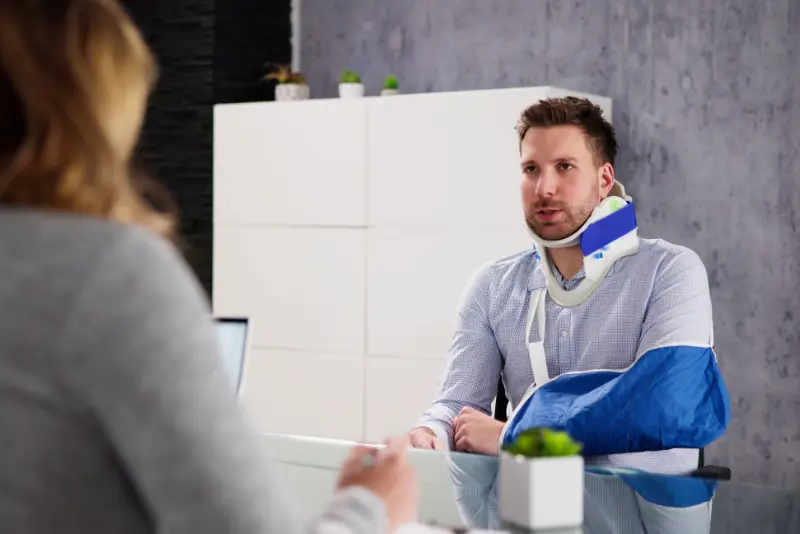
You might think the toughest part of a personal injury claim is dealing with the injury itself. A crash, a slip, or that reckless driver who sends you spinning—shouldn’t that be enough proof? Not so fast.
At Blair & Ramirez LLP, we see lots of people who can recall all the painful details: the crash, the ambulance ride, or the hurt. But guess what? Remembering things and proving them are like apples and oranges. Insurance companies, defense lawyers, and courts demand more than just a sad story. They want solid evidence.
Think about it this way: If someone told you it rained yesterday, you might nod in agreement. But if they showed you weather reports, photos, and even security footage, you’d say, “Wow, I believe you!” Personal injury cases work a lot like that.
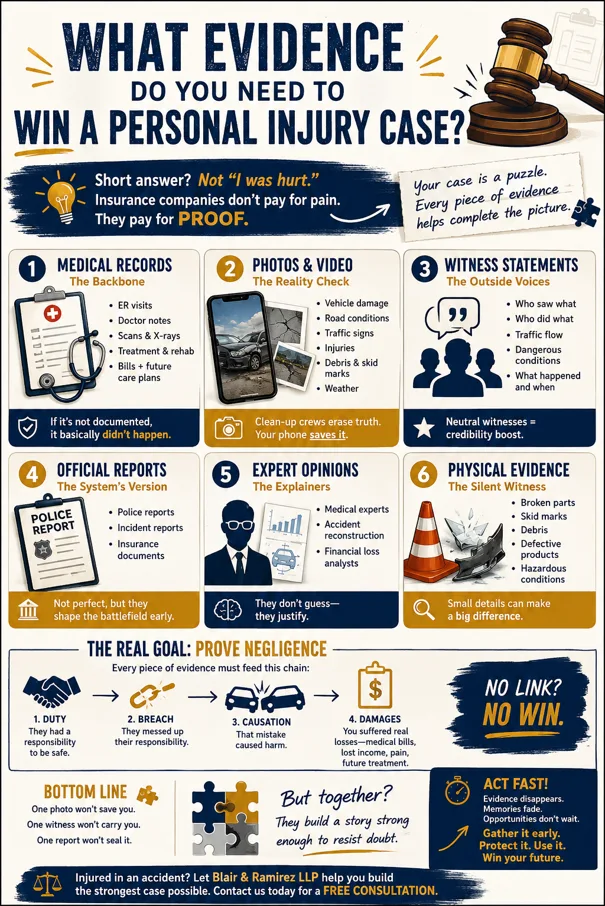
Many people want a quick checklist of what evidence they need to win a personal injury case. The truth is a bit cooler. Winning cases is like a jigsaw puzzle. Every picture, medical record, witness statement, and expert opinion helps frame the story about what happened and why you deserve to win.
The great news is that much of this evidence is around long before anyone files a lawsuit. And the trick is knowing how to save and use it.
Strict Liability in California: How It Protects Dog Bite Victims
Think about two drivers who crash, and both blame each other. Who wins this debate? The answer lies in the evidence.
Insurance companies and courts don’t just care about feelings. They dig into facts. Sure, you might feel it’s the other driver’s fault, but “just believing” is not enough to win your case. The best evidence in a personal injury claim often comes from a mix of things like:
- Medical records
- Accident reports
- Photos
- Video clips
- Witnesses
- Expert opinions
- Physical evidence from the scene
Think of evidence as puzzle pieces. One piece alone won’t show the full picture, but enough pieces together create an image that’s hard to ignore.
California courts consistently emphasize this principle.
In Mitchell v. Hutchinson (2025), the California court looked at whether enough evidence linked a road hazard to the driver’s actions. They showed that guessing can’t replace proof.
No proof? No win.
How Do Medical Records Prove Your Injuries?
Trust me, don’t overlook medical records. These documents are a big deal in personal injury claims. Why? They make a timeline of your injury journey.
When did it happen? What hurt first? What treatment did a doctor give you? How serious was it? How long did it take to heal? These records answer questions insurers ask all the time.
Think about it like this: A person hurts their back in an accident but waits three months to see a doctor. An insurer might argue the injury wasn’t due to the crash.
Now, think of someone who rushes to the hospital right after the crash. They keep track of every appointment and therapy session. That’s a much stronger link between the crash and the injury.
Medical records can include:
- Emergency room visits
- Doctor’s notes
- X-rays or scans
- Surgical reports
- Rehab documents
- Medicine prescriptions
- Future treatment plans
These records show your injury and how it impacts your life and wallet. Without them, it becomes much harder to prove you deserve compensation.
How Can Accident Photos Strengthen Your Case?
These days, everyone’s got a camera in their pocket. That little gadget can become your best friend in a personal injury case. Why? Because photos capture what happened before memories start to fade away.
A damaged car can be fixed. Slippery floors can be cleaned up. Scratch marks can vanish. But pictures stick around, showing exactly what was there after the accident. Useful snaps might show:
- Car damage
- Road conditions
- Traffic signs
- Weather at the time
- Injuries
- Broken items
- Crash debris
Photos can answer questions even before they’re asked.
California courts see visual proof as super important. In Agustin v. Golden Empire Transit District (2025), the video footage helped determine exactly how an accident occurred and if the driver’s actions led to the injuries. Rather than just listening to stories, the court looked at the cold, hard visuals.
Remember, evidence lacks emotions and doesn’t forget details. Photos can be a powerful part of proving your case.
How Do Witness Statements Support Your Claim?
Have you ever noticed how people recall events differently? It’s real. Two friends can see the same movie and come away with different takes. The same thing happens after accidents. That’s why independent witnesses are pure gold.
Witnesses offer viewpoints you can’t control, sharing details about:
- Traffic flow
- Driver actions
- Dangerous conditions
- What happened and when
- Comments made afterward
A trustworthy witness can boost key facts and make your case stronger. What if a driver claims they had a green light, but three witnesses say otherwise? That changes everything.
Timeliness matters, too. Witnesses can move, change numbers, or forget stuff. So, collecting witness info right after an accident can make a huge impact.
The best witness accounts come from people with no connection to the accident. They’re just there to share what they saw.
How Do You Prove Negligence After an Accident?
This part can make or break a personal injury case. “Negligence” might sound complicated, but it’s not. At its core, it asks: Did someone act irresponsibly and cause harm?
To prove negligence, you usually need to show four things:
Duty of Care
The person had a responsibility to be safe.
- Drivers need to drive carefully.
- Property owners must keep their areas safe.
Breach of Duty
They messed up their responsibility.
- Running a red light.
- Ignoring unsafe conditions.
Causation
The mistake led to the injury.
This part is tricky. Insurers often argue that injuries existed before the crash.
Damages
The injured person suffered real harm.
It can include medical bills, lost income, pain, and future treatments.
When people ask what evidence they need to win a personal injury case, they want to figure out how to prove these four elements. Every piece of evidence should support at least one. The stronger the link, the stronger your claim.
Is Your Evidence Strong Enough to Win?
Many people think that one piece of evidence can make or break a case. But guess what? That’s rare.
Successful claims look more like a strong chain. Each link holds up the next. For example, medical records back up your injury claims. Photographs can show who’s responsible. Witness statements tell the facts, while experts explain tricky details. When you combine them, you get a powerful story.
Take the California case, Sobalvarro v. Vibra Health Care (2026). The court dug through tons of testimony, records, and evidence to evaluate claims of negligence. They didn’t just rely on one witness or one piece of paper. Instead, there were many types of evidence that worked together to paint a full picture.
That’s how strong injury claims succeed, not with one big dramatic moment but through solid, trustworthy evidence that backs itself up from all angles.
So, when figuring out what evidence you need to win a personal injury case, ask yourself this: Does your evidence tell a complete story? If the answer is yes, you’re on the right track.
Frequently Asked Questions
The Evidence You Gather Today Can Shape Tomorrow
Accidents can occur in the blink of an eye. But the effects can hang around for months, years, or even forever. That’s why evidence is super important.
A rock-solid personal injury case doesn’t rely on what you think—it’s built on real documentation and proof and thoughtful planning. The pictures you snap today, the medical care you get tomorrow, and the witness information you collect this week can become the groundwork for your case.
If you’re scratching your head about what you need to win a personal injury claim, you don’t have to figure it out alone.
At Blair & Ramirez LLP, we help injured Californians gather and present the most important evidence. The sooner you act, the better your chances of keeping important proof safe and fighting for the compensation you deserve.
So, why wait? Contact Blair & Ramirez LLP today and take the first step toward building the strongest case possible.