

TL;DR
A drowsy driving accident lawsuit can help injured people seek compensation when a tired driver causes a crash. California law requires drivers to use reasonable care, and evidence of fatigue can help establish negligence and liability.
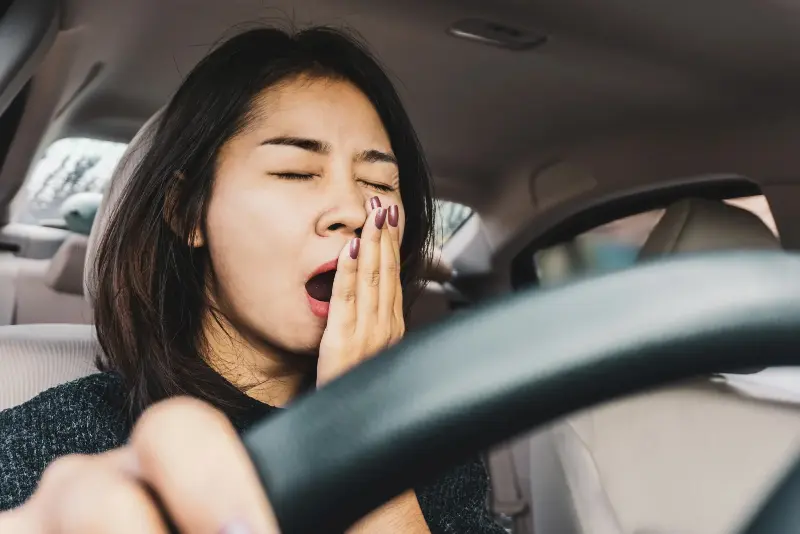
Most people know better than drinking and driving. But what about driving after 20 hours without sleep? What about fighting heavy eyelids on the freeway because home is only another 15 minutes away?
That decision can change someone else’s life. A tired driver can miss a red light, drift into another lane, or crash into a car stopped ahead. For injured people, the question is simple: Who takes responsibility?
At Blair & Ramirez LLP, we understand how a serious car accident can affect someone’s health, work, and family. Our Los Angeles car accident attorneys help injured people understand their rights, investigate negligence, and explore their options under California law.
1. When Does Drowsy Driving Become Negligence?
Everyone gets tired. But getting behind the wheel when you cannot stay alert is a different matter.
California drivers must use reasonable care. That means watching the road, controlling their vehicles, and responding to hazards. The California Judicial Council’s Civil Jury Instruction 700 explains that failing to use reasonable care while driving amounts to negligence.
Consider a driver who finishes an overnight shift and starts a long drive home. Their eyes grow heavy, but they keep going. Seconds later, they drift across the center line and hit another vehicle.
Could that driver face liability?
Yes, if the evidence shows that their fatigue caused the crash and their conduct fell below the required standard of care.
People v. Deetch (2026) offers a recent Los Angeles-area example. Benjamin Deetch drove into the back of a semitruck on Highway 91 near Long Beach in 2022. His passenger, who was asleep and unrestrained, suffered fatal injuries. A jury convicted Deetch of vehicular manslaughter with gross negligence, and the California Court of Appeal affirmed the judgment on May 20, 2026.
The case involved disputed evidence about the collision, including the truck’s lane position and rear lights. Importantly, the opinion does not establish that Deetch fell asleep at the wheel. It concerns gross negligence and the evidence supporting the conviction.
2. Falling Asleep at the Wheel Liability and Who Pays
A driver does not have to fall completely asleep to create danger. Slow reactions, drifting between lanes, and missed traffic signals can all point to fatigue.
But who pays when a crash happens?
The answer depends on the facts. The driver may face a personal injury claim. If the driver worked for a company, the employer could also face liability under certain circumstances.
|
Situation |
Possible legal issue |
|
A driver falls asleep and hits another car |
Driver negligence |
|
A truck driver works excessive hours |
Driver and possible employer liability |
|
A delivery company ignores known fatigue risks |
Negligent supervision or other employer liability |
|
A tired driver causes a fatal crash |
Potential wrongful death claim |
A company does not automatically become responsible because an employee crashes while tired. The injured person must establish a legal basis for the company’s liability.
In Ortiz v. Daimler Truck North America LLC (2025), a California appellate court considered whether a truck manufacturer could face liability after a commercial truck struck a car at a red light. The plaintiffs argued that the truck lacked a collision avoidance system. The trial court dismissed their claims, but the Court of Appeal reversed and sent the case back for further proceedings. The court explained that a driver’s negligence does not automatically rule out another party’s responsibility.
Although Ortiz was not a drowsy driving case, it matters here because a crash can have more than one contributing cause.
Blair & Ramirez also handles truck accident cases, including claims involving serious commercial vehicle collisions.
3. Proving Driver Fatigue Evidence After a Crash
How do you prove someone was too tired to drive? A driver rarely admits that they could barely keep their eyes open. That is why physical evidence and witness accounts matter.
A strong investigation can look at:
- Phone records: Did the driver send messages or make calls suggesting they had been awake for hours?
- Work schedules: Did an employer give a driver an unusually long shift?
- Witness statements: Did someone see the driver drifting, yawning, or struggling to stay awake?
- Dashcam footage: Does the video show sudden braking, lane drifting, or delayed reactions?
- Medical records: Did medication or a medical condition affect the driver’s alertness?
- Crash reports: Did investigators record signs of fatigue or statements about falling asleep?
The California DMV warns that fatigue and drowsiness can affect vision and increase reaction time. It also warns that some prescription and over-the-counter medicines can make driving unsafe.
A recent California incident also shows why this issue deserves attention. In October 2026, passengers recorded a Tahoe-area bus driver who appeared to struggle to stay awake during a route. Placer County confirmed an investigation after passengers raised safety concerns. This was a reported transit safety incident, not a court finding or a confirmed injury lawsuit.
What if a driver denies feeling tired? That does not end the investigation. Records, video, and witness accounts can help establish what happened before the collision.
4. What Can You Recover Through a Late Night Crash Injury Claim?
A late-night crash can leave someone with more than a damaged car. There may be hospital bills, missed work, lasting pain, and months of treatment.
What can an injured person seek?
California law allows eligible accident victims to pursue compensation for losses supported by their claims and evidence.
| Type of damage | What it covers |
|---|---|
| Medical expenses | Emergency care, hospital stays, medication, and rehabilitation |
| Lost income | Pay missed while recovering |
| Future medical costs | Expected treatment and ongoing care |
| Loss of earning capacity | Reduced ability to earn money |
| Pain and suffering | Physical pain and emotional distress |
| Property damage | Vehicle repairs or replacement |
The final amount depends on the injury, available evidence, and each party’s share of responsibility.
California also follows pure comparative negligence. What does that mean? An injured person can still seek compensation even if they share some blame. But their recovery can decrease according to their percentage of fault.
For example, if someone has $100,000 in proven damages and receives a 20% fault allocation, the potential recovery becomes $80,000.
That is an illustration, not a prediction of any case outcome.
5. What Should You Do After a Drowsy Driving Accident?
The priority is your health. A crash can cause injuries that do not show clear symptoms right away. Seek medical attention, even if you initially feel fine.
Then focus on preserving information.
- Report the accident to law enforcement.
- Get medical care and keep your treatment records.
- Photograph the vehicles, road conditions, and visible injuries.
- Collect contact information from witnesses.
- Save relevant messages, dashcam footage, and other available evidence.
- Keep receipts and records of missed work.
- Avoid making assumptions about fault before the evidence is clear.
What if the other driver works for a delivery company or trucking business? Record the employer’s name and vehicle details. Those facts can help investigators identify other potentially responsible parties.
California also has filing deadlines. Many personal injury lawsuits have a two-year deadline under Code of Civil Procedure section 335.1. Claims against government entities generally require a government claim within six months under Government Code section 911.2, subject to exceptions and other rules.
Frequently Asked Questions About Drowsy Driving Accidents
Key Takeaways
- Drowsy driving can amount to negligence when a driver fails to use reasonable care.
- Phone records, work schedules, witness statements, and video can help establish fatigue.
- Employers and other parties can share responsibility in certain circumstances.
- California’s comparative negligence rule allows recovery even when an injured person shares fault.
- Filing deadlines and strong evidence both matter when pursuing compensation.
A Tired Driver’s Decision Can Change Someone’s Life
Nobody expects to leave home and end up in a hospital because another driver could not stay awake. Yet these accidents happen, and the consequences can follow injured people for years.
The important questions are who caused the crash, what evidence supports the claim, and which parties should take responsibility.
If you or someone close to you has suffered injuries in a fatigue-related collision, Blair & Ramirez LLP can help you understand your legal options. Contact us today for a free case evaluation and learn how our personal injury team can evaluate your circumstances and pursue the compensation available under California law.