

TL;DR
A multi-car accident passenger injury can leave you facing medical bills, lost income, and questions about who should pay. California law may allow injured passengers to seek compensation from one or more responsible parties, depending on the evidence, insurance coverage, and facts of the crash.
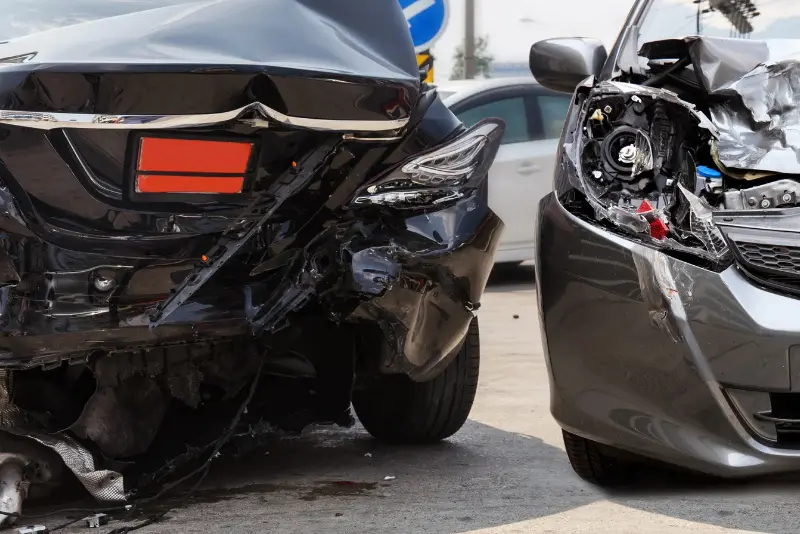
A normal drive can turn into a nightmare in seconds. One driver brakes too late. A truck slams into a car. That car hits another vehicle, and suddenly, several people need medical care. But what happens to the person sitting in the passenger seat?
A multi-car accident passenger injury raises questions that a simple rear-end crash does not. Who caused the first impact? Did another driver make things worse? Which insurance company should cover the passenger’s medical bills?
Blair & Ramirez LLP helps people understand their legal options after an injury. When several vehicles collide, the firm can help injured people examine the evidence, identify potentially responsible parties, and understand their options for seeking compensation. Because being a passenger does not mean you should have to sort through every driver’s version of events alone.
Why Tracy Morgan’s Five-Car Crash Still Matters
In June 2014, comedian and actor Tracy Morgan was riding in a limousine van on the New Jersey Turnpike when a Walmart tractor-trailer struck it from behind. The crash triggered a chain reaction involving five vehicles. Morgan suffered serious injuries, and his friend, comedian James McNair, died.
The National Transportation Safety Board reported that the truck driver was traveling at about 65 mph as he approached a work zone with a lower speed limit. The investigation examined the driver’s failure to slow for traffic and other safety issues.
[Read the Los Angeles Times report on the crash and the NTSB preliminary report.]
Why does this story matter to ordinary California drivers? Because passengers do not control the speed of the truck behind them, the distance between vehicles, or the choices other drivers make. Yet they can suffer life-changing injuries when those choices lead to a crash.
Morgan’s accident happened in New Jersey, not California. It illustrates how a chain reaction can injure passengers, but California law governs claims arising from crashes within the state.
Can You Make a Passenger Claim When Multiple Drivers Are at Fault?
Yes. If evidence shows that multiple drivers contributed to a California crash, an injured passenger may have grounds to pursue claims against more than one responsible party. The exact options depend on the facts, applicable law, and available insurance.
Consider a driver who speeds toward stopped traffic and hits the car ahead. That impact pushes the car into the vehicle carrying a passenger. A third driver then strikes the wreckage. Each driver’s actions deserve a closer look.
|
What happened |
What investigators may examine |
|
A driver hit the car from behind |
Speed, following distance, braking, and distraction |
|
The first impact pushed another car forward |
The chain of impacts and each driver’s role |
|
A third vehicle hit the wreckage |
Reaction time, visibility, and safe driving choices |
|
A commercial truck caused the first impact |
Driver conduct, company records, and possible employer liability |
A passenger does not have to know who caused the crash at the scene. Police reports, witness accounts, vehicle damage, photographs, and crash-reconstruction evidence can help establish what happened.
Still, a collision involving several vehicles does not automatically make every driver liable. Evidence must connect each person’s conduct to the injuries.
How Comparative Fault Can Affect Passenger Compensation
California follows a pure comparative negligence system. Courts can divide responsibility according to each party’s share of fault. An injured person can generally recover damages even when that person shares some responsibility, although the person’s recovery may decrease by their percentage of fault.
For example, suppose a court awards $100,000 in damages and finds that the injured person bears 10% of the responsibility. The award would generally fall to $90,000.
What if two drivers caused the crash? Their shares of responsibility and the rules governing liability can affect the outcome. A comparative fault passenger claim therefore requires careful attention to the evidence, not just the number of vehicles involved.
A recent California decision offers a useful lesson.
In Birdsall v. Helfet (2025), a van stopped in traffic on the Bay Bridge was struck from behind and pushed into another vehicle. The injured driver had not worn a seat belt. After a jury awarded damages, the Court of Appeal reversed the judgment and ordered a new trial.
The court held that the trial judge had wrongly excluded evidence and jury instructions about seat belt use. It also found a factual dispute over whether the parties had reached a settlement with the insurer.
Birdsall was a driver-injury case, not a passenger claim. But it highlights two issues that can matter in a multi-car crash: evidence about how injuries occurred and the details of insurance settlement negotiations. The court did not decide that the injured driver was at fault for the crash simply because he had not worn a seat belt.
Which Insurance Companies Might Pay?
When several vehicles collide, more than one insurance policy may matter. The key is to identify the policies that could cover the injuries and determine which parties bear legal responsibility.
|
Potential source |
Why it may matter |
|
At-fault driver’s liability insurance |
May cover injuries caused by that driver’s negligence, subject to policy terms and limits |
|
Another responsible driver’s insurance |
May provide another route to compensation when that driver’s conduct contributed to the crash |
|
The passenger’s uninsured/underinsured motorist coverage |
May apply if an eligible at-fault driver lacks insurance or has insufficient coverage |
|
A commercial vehicle policy |
May apply when a covered truck or business vehicle causes the collision |
|
The passenger’s medical payments coverage |
May help pay eligible medical expenses if the policy includes this benefit |
A passenger may need to consider filing a claim against multiple insurers. That does not mean the passenger can collect the full amount of damages from every insurer. Policy limits, coverage terms, liability findings, and rules against double recovery all matter.
Two other recent California cases show why these questions need close review.
In Murphy v. Pina (2025), a passenger named Jalen Murphy suffered a traumatic brain injury after a stolen car crashed. His parents later brought wrongful-death claims, arguing that the brain injury contributed to his death from a fentanyl overdose more than two years later. The Court of Appeal upheld judgment for the vehicle owner’s grandmother and her auto-body business because the evidence did not establish the required agency relationship or a legal duty under the circumstances.
This was not a multi-car crash, and the court did not decide a passenger’s claim against several auto insurers. Its lesson is narrower: identifying a vehicle owner does not automatically establish liability. The facts must support a legal basis for holding that person or business responsible.
In Murphy v. AAA Auto Insurance of Southern California (2025), an employee who delivered products in his personal car sought coverage after a collision. The insurer relied on a policy exclusion for transporting property for compensation. The Court of Appeal upheld the denial because the exclusion applied to his work-related use of the car.
This case involved vehicle damage and insurance coverage, not an injured passenger seeking bodily injury compensation. Still, it shows why reading the actual policy matters. A policy’s terms can affect whether a particular loss qualifies for coverage.
What a Recent Passenger Injury Case Teaches About Evidence
In Pagan v. City of San Rafael (2026), 16-year-old Kaylin Pagan suffered injuries while riding in a car driven by a friend on a rainy day. The car hydroplaned near a curve and went down a hillside. Pagan sued several parties, including the city, claiming that the road lacked proper warnings and barriers.
The California Court of Appeal affirmed judgment for the city. It found that the wet road and curve presented an open and obvious risk. The court also explained that Pagan could not rely on a roadway-defect theory that her complaint had not alleged.
This was a single-car crash, not a multi-car accident. It did not decide who was liable for a passenger injury caused by several drivers. But it offers an important lesson: strong evidence must support the actual legal claims being made.
For a passenger injured in a chain reaction, useful records can include:
- Photos and videos of the vehicles, roadway, and crash scene.
- Police reports and witness contact details.
- Medical records that connect the injuries to the collision.
- Vehicle damage reports and available surveillance or dashcam footage.
- Insurance information for the drivers and any commercial vehicle owners.
The sooner these records are organized, the easier it can be to understand the sequence of events and evaluate potential claims.
Frequently Asked Questions
Key Takeaways
- Passengers injured in multi-car crashes may have claims against more than one responsible driver.
- California’s comparative fault rules can affect how courts divide responsibility and damages.
- More than one insurance policy may apply, but policy terms and limits matter.
- Police reports, medical records, photos, and witness accounts can help establish what happened.
- A review of the facts and applicable deadlines can help clarify a passenger’s legal options.
You Were the Passenger, Not the Cause
A multi-car crash can leave you dealing with pain, missed work, medical bills, and several insurance companies pointing fingers at one another. You deserve clear information about what happened and what options the law may offer.
Blair & Ramirez LLP can help you understand your legal options, review the facts of your accident, and assess potential paths to compensation. Contact Blair & Ramirez LLP to request a free case review and learn what steps may be available for your situation.