

To choose a California personal injury lawyer after SB-37, start by checking whether their case results are real, whether the attorney is actually the person behind the ad, and whether the information they shared is truthful. These checks sound technical, but they matter when you’re already dealing with pain, stress, or financial pressure.
SB-37 is a new California law that took effect in 2025. It was created to protect injured victims from misleading ads, hidden marketers, and promises that were never backed by facts.
Before SB-37, many victims and families chose a lawyer based on whatever ad appeared first, even if the claims were vague or the attorney wasn’t clearly identified. Now, SB-37 gives you clearer information and helps you understand exactly who you’re dealing with before you reach out. This shift helps you feel more certain about who you’re trusting at a moment when your health and future truly matter.
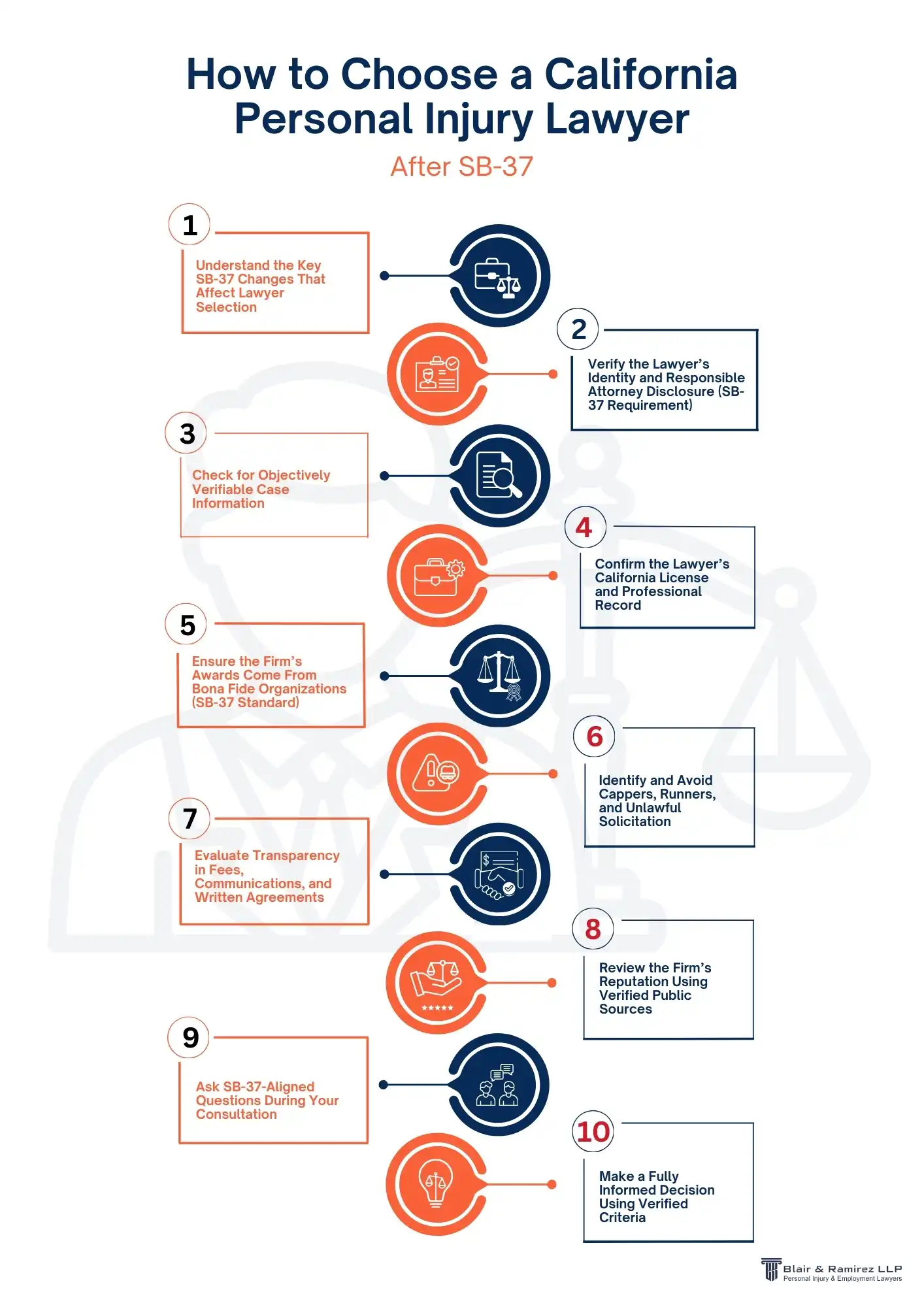
1. Understand the Key SB-37 Changes That Affect Lawyer Selection
SB-37 changed what you see in a lawyer’s advertisement, which affects how you judge whether someone is credible. The law now requires lawyers to take responsibility for their advertising and present information that reflects their actual qualifications. These changes help you look past the surface and see who is truly taking responsibility for the message you’re reading.
SB-37 also limits the use of promotional labels or awards unless they come from legitimate, recognized sources. This matters because you no longer have to guess whether an award means something or was simply purchased. The new rules push every lawyer toward clearer, more honest communication, giving you a more reliable starting point when deciding who to trust.
2. Verify the Lawyer’s Identity and Responsible Attorney Disclosure (SB-37 Requirement)
SB-37 requires every legal advertisement in California to show the full name of the attorney who is actually responsible for the message. This rule protects you from anonymous marketing and gives you a clear way to confirm that the person you’re considering is a real, licensed attorney. When you know the name behind the ad, you can check their background before you share anything personal.
How to verify a lawyer’s identity:
- Locate the full name of the responsible injury attorney on the advertisement.
- Search that name on the California State Bar to confirm the license is active.
- Make sure the ad lists a genuine office location you can identify.
- Check the “discipline” section of the State Bar profile to see if the attorney has past issues.
- Confirm that the attorney, not a marketing company or referral service, is listed as the responsible party.
3. Check for Objectively Verifiable Case Information
SB-37 requires lawyers to share case results that you can verify, which means the details must be specific and tied to real events. When you read a result, look for the case type, the year it was resolved, and the California county or court where it happened. These details give you real context instead of broad promises, helping you understand what the lawyer actually handled.
Examples of compliant vs. non-compliant case information:
Compliant:
- “2023 premises liability settlement in Orange County Superior Court.”
- “2024 rear-end collision case resolved in Irvine.”
Non-Compliant:
- “We win big settlements.”
- “Millions recovered for accident victims.”
4. Confirm the Lawyer’s California License and Professional Record
A lawyer’s State Bar profile helps you understand their experience and whether they have maintained a stable, compliant career in California. The State Bar profile shows how long they’ve practiced, whether they remain qualified to take cases, and whether the Bar has issued any administrative notices. These details help you see the attorney’s long-term professionalism rather than relying on advertising alone.
What to review in the attorney’s professional record:
- Eligibility to practice: Check that the attorney is listed as “eligible” with no restrictions.
- Admission date: Review how many years they have been licensed in California.
- Administrative actions: Look for suspensions or compliance notices listed in the public file.
- Public record transparency: Check that the profile includes complete contact details consistent with professional records.
5. Ensure the Firm’s Awards Come From Bona Fide Organizations (SB-37 Standard)
SB-37 changed how lawyers can present awards by requiring that any recognition shown in an advertisement come from a legitimate, established organization. This protects you from titles that sound impressive but have no real selection process behind them. When an award is credible, you can understand what it represents and why the attorney received it. Unverified awards provide little insight into an attorney’s real background or work.
Examples of compliant vs. non-compliant awards:
Compliant:
- “Recognized by the Orange County Bar Association for 2024 community service.”
Why: A local Bar Association is a bona fide, established legal organization with a documented selection process.
Non-Compliant:
- “Top Injury Lawyer Award 2024.”
Why: The title does not name the awarding body, provides no criteria, and cannot be verified, which violates SB-37’s transparency standards.
6. Identify and Avoid Cappers, Runners, and Unlawful Solicitation
Cappers and runners try to insert themselves into your situation by making contact you never asked for. Cappers reach out through calls or messages, while runners are tied to networks that send people out to find new clients. California treats these tactics as unlawful solicitation, and SB-37 strengthens the expectation that lawyers communicate honestly and through approved channels. Knowing these patterns helps you avoid situations that place your personal information and your case at risk.
Red flags to watch for:
- Anyone contacting you about a lawyer after a crash without your request.
- Strangers appearing at hospitals, tow yards, or your home offering attorney introductions.
- Messages claiming they “work with your insurance” or know “the best lawyer for you.”
- Promises of money, transportation, or benefits tied to choosing a specific injury attorney.
Working with a lawyer connected to these practices may compromise the legitimacy of your case and expose you to unnecessary risk.
7. Evaluate Transparency in Fees, Communications, and Written Agreements
Transparency matters when you’re choosing a lawyer because it tells you what to expect before you sign anything. California’s conduct rules require clear written agreements and honest fee explanations, and SB-37 reinforces those expectations by demanding truthful, non-misleading advertising.
What transparency should look like:
- Clear fee explanations: The agreement spells out the contingency percentage, cost responsibilities, and when expenses apply.
- Communication expectations: The lawyer explains who contacts you, how often, and how questions are handled.
- Written terms: The retainer outlines the work the lawyer will complete and the limits of the representation.
Clear explanations about fees, communication, and responsibilities help you understand how the attorney-client relationship will function and avoid any misunderstandings later.
8. Review the Firm’s Reputation Using Verified Public Sources
When you want to understand a law firm’s reputation, it’s safest to use sources where real clients share their own experiences. SB-37 limits the way testimonials appear in attorney advertising, so independent platforms help you see feedback that hasn’t been shaped for marketing. These sources give you a clearer view of how a lawyer communicates, follows through, and supports clients during difficult situations.
Reliable places to review a law firm’s reputation:
- Google Reviews or Yelp: Look for detailed comments about communication, professionalism, and follow-through.
- Avvo or similar attorney directories: Check ratings, endorsements, and the depth of the attorney’s profile.
- California State Bar profile: Confirm eligibility to practice and see any public record information tied to the firm or attorney.
- Court records: Review past filings or case involvement to understand the attorney’s actual participation in litigation.
Consistent patterns across multiple sources are more meaningful than any single positive or negative comment.
9. Ask SB-37-Aligned Questions During Your Consultation
You deserve clear answers when you’re meeting with a personal injury lawyer, especially now that SB-37 sets strict rules for honest advertising. Asking direct questions about their ads, awards, and representation practices helps you understand how seriously they follow these standards.
Questions to ask during your initial consultation:
- What information in your advertisements is verifiable, and where can I confirm it?
- Which attorney is responsible for the content in your ads?
- How do you decide which case results or recognitions you share publicly?
- What steps do you take to make sure your advertising follows SB-37 requirements?
- What should I understand about your fee structure before deciding to work with you?
- What protections do you follow to keep my information private when I contact your office?
- How do you handle client communication throughout the case?
A lawyer who follows SB-37 should welcome these questions and answer them clearly and without hesitation.
10. Make a Fully Informed Decision Using Verified Criteria
When you reach the point of choosing a lawyer, rely on the information you’ve already gathered: verified identity, accurate case results, active license status, legitimate awards, consistent reputation patterns, and clear answers during your consultation. These details give you a factual picture of who the attorney is, not just how they advertise.
SB-37 strengthens this process by removing vague claims and making objective criteria more trustworthy. When you base your choice on information you can confirm, you protect yourself and gain confidence in the lawyer handling your injury claim.
How SB-37 Protects Personal Injury Clients From Misleading Attorney Advertising
SB-37 protects bodily injury victims by requiring every attorney advertisement to list the responsible lawyer and share information that can be checked. This makes it easier to verify an accident attorney’s license, confirm their background, and understand who you are contacting. These protections help you avoid anonymous ads or hidden referral networks that once confused many accident victims.
SB-37 also limits vague case results and non-bona fide awards, reducing claims that exaggerate experience or success. With clearer and more honest ads, you can evaluate lawyers using real information rather than marketing language.
What an SB-37-Compliant Personal Injury Law Firm Looks Like
A personal injury law firm operating in full compliance with SB-37 demonstrates transparency every time it communicates with the public. You can recognize compliance by looking for specific traits that reflect accuracy, honesty, and accountability.
Indicators of an SB-37-compliant firm:
- Named responsible attorney: Every ad clearly identifies the attorney who created or approved it.
- Verifiable case information: Case results include the case type, year, and California jurisdiction.
- Legitimate award descriptions: Recognitions come from real, established organizations with clear selection criteria.
- Clear fee explanations: Written agreements describe contingency percentages and cost responsibilities.
- Accurate office information: Ads and State Bar records show consistent, verifiable locations.
- Transparent communication: The firm explains who handles your calls, how updates work, and what you can expect.
- Ethical marketing practices: No vague promises, exaggerated claims, or anonymous outreach.
FAQs About Choosing a Personal Injury Lawyer After SB-37 in California
Speak With Blair & Ramirez LLP to Clarify Your Next Options

- Responsible Attorney: Matthew P. Blair or Oscar Ramirez
- Office Address: 555 W. 5th Street, Suite 3750, Los Angeles, CA 90013
Tell Us What Happened - We’re Ready to Help