

Californians face hard choices every day.
Some decisions are about money, some are about health, and sometimes they’re about both.
Let’s say you get hurt in a car crash. You can’t work, and medical bills pop up like pesky weeds. Then, the insurance company calls with an offer. It sounds like a big chunk of money. It might even feel like a lifesaver. But wait, what if it’s not enough?
That question can really stress people out. We’ve spoken with people who accepted a settlement just days after their accident. Later, they found out their injuries were way worse than they thought. And others said “no” to a good offer, fought in court for ages, and ended up with less money. So, how do you know if it’s the right time to take the offer?
It’s not just about the cash. It’s about details, like your injuries, future treatments, how strong your evidence is, and if the insurance company is treating you fairly. Once you say yes to a settlement, it’s usually a “no takesies-backsies” situation. Once you accept, that’s it. Timing is crucial.
How to Figure Out an Injury Settlement Offer
Before you say yes to an offer, ask yourself some important questions. Have you finished all your medical treatments? Do your doctors fully understand your injuries? Have you thought about lost wages and future medical costs?
Lots of people focus only on the bills staring them in the face right now. And that makes sense. But what about next year?
Consider this: a driver feels fine after a fender bender. The doctor gives them a green light. But three months later, an MRI shows a herniated disc, and guess what—surgery is needed. Now that the first settlement offer looks way too small.
At Blair & Ramirez LLP, we tell our clients to think about more than just today’s bills. A fair settlement should cover:
- Current medical expenses
- Future medical treatment
- Lost income
- Chance of reduced earnings
- Pain and suffering
- Emotional distress
- Long-term limitations
The biggest settlement is not always the best one. The right settlement is the one that truly reflects what your case is worth.
First Settlement Offer From Insurance Company
Insurance companies often send a first offer faster than you can say “settlement.” Why? Because they know something many injured people don’t: time reveals more information. The longer doctors check your condition, the clearer your claim becomes.
That’s why you need to take a real close look at early offers.
A recent California case, Birdsall v. Helfet (2025), showed how important the tiny details of a settlement really are. The court looked at whether the insurer took a proper settlement offer after some confusing paperwork issues. The ruling reminded everyone that settlements depend on accurate terms and not just the money amount.
So, when the insurance company rushes an offer your way, ask yourself: Why are they in such a hurry? Have they seen something that could make my claim worth more later?
Sometimes a quick offer is a good deal, but often it needs a second glance.
Signs a Settlement Offer Is Too Low
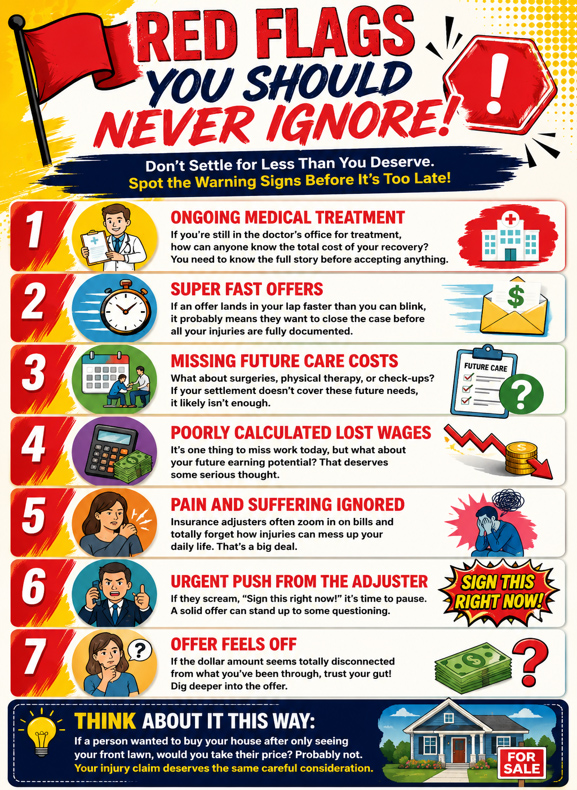
A low settlement offer doesn’t come with a warning sign. No one from the insurance company says, “Hey there, this amount is way lower than what you might be entitled to.” Instead, the hints are sneaky little clues. Let’s break it down.
Red Flags You Should Never Ignore
Why Court Rulings Matter
Many believe that settlement values never change. But guess what? They do. Court decisions constantly reshape how cases get evaluated.
Take the case of Snover v. Gupta (2025). In this case of severe medical negligence, the jury awarded more than $17 million before any cuts. This shows that serious injuries can have huge future value that isn’t clear when you’re negotiating early on.
What does this mean for injured Californians?
Simple: Your settlement should not only reflect today’s injuries but also potential long-term impacts.
Negotiating a Personal Injury Settlement
Many people handle settlements like they’re at a garage sale. The insurance company throws out a number, the claimant asks for more, and they haggle to find a middle ground. But real negotiations are way deeper than that.
Successful negotiations start with strong evidence. Think of medical records, expert opinions, employment records, photos, and witness statements. The better your evidence, the stronger your negotiating stance.
This principle even pops up in settlement disputes. In Jacobs v. Papez (2026), California’s Third District Court unraveled issues over attorney fees from a personal injury case. Just like how every dollar in your settlement matters, every detail about it should be clear and justified.
Negotiations get way easier when the facts create a strong story.
Should I Accept Injury Settlement Without a Lawyer
This question comes up a lot. Can you go solo? Yes. But should you? That depends.
If you’ve had a minor accident with small medical bills, handling it yourself might work out. But what if your injury affects your job? What if you need future treatment? What if blame gets shared among different parties? The risks can pile up.
Insurance companies deal with claims all day, while most injured people don’t. Think of entering a chess match already halfway through while the other player has been practicing for years. Sure, you could win, but wouldn’t you want to know the rules first?
An experienced attorney can point out damages you might miss, challenge unfair evaluations, and help you negotiate from a strong position. Most importantly, a lawyer can help tackle the biggest question of all: When should you say yes to a personal injury settlement offer? Because timing is just as important as the amount.
Frequently Asked Questions
One Signature Can Change Everything
A settlement offer can feel like the finish line. Sometimes it is. Other times, it’s just the starting gun. The trick is knowing which it is. If you accept too quickly, you might leave cash on the table. But if you wait too long without a plan, you could create delays that are just annoying.
At Blair & Ramirez LLP, we help injured Californians cut through the pressure and carefully look at every offer. Reach out. We’ll help you fight for compensation that reflects how your injuries have impacted your life. Before you commit to a settlement, make sure you know exactly what you’re letting go of and how much your case could really be worth.
Remember, a quick signature might only take a few seconds, but living with the outcome can last for years.