

TL;DR
After a crash, focus on safety, medical care, evidence, and proper reporting before worrying about a settlement. If you suffered an injury or the insurance process becomes difficult, getting legal advice early can help you understand your options.
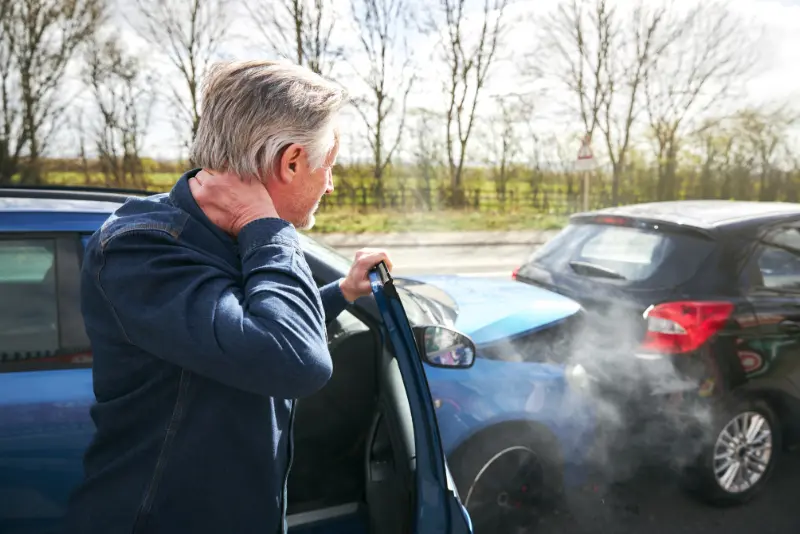
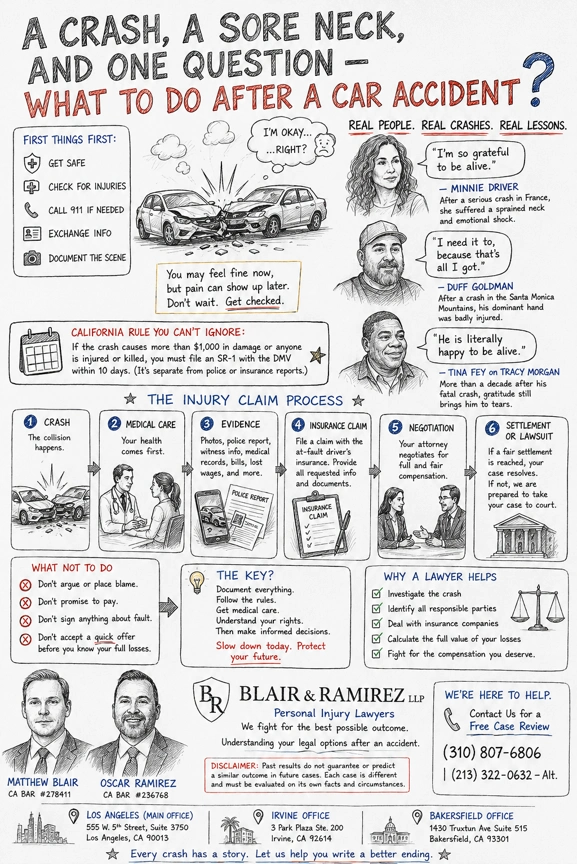
If you are wondering what to do after a car accident, start with the basics: get to a safe place, check for injuries, call 911 if someone needs help, exchange information, and document the scene. California’s Department of Motor Vehicles and Department of Insurance both recommend these steps because the first few decisions after a crash can affect what happens next.
Then there is the part people often overlook. You may feel fine at the scene and notice pain later. You may think the damage looks minor until you get the repair estimate. You may also assume the insurance claim will be simple. It may not be. Knowing what to do early can help you protect your health, your records, and your claim.
How Do You Act Immediately?
The first thing to do is not decide who is guilty.
It is to get safe.
Stop. If you can move your vehicle without creating another danger, move it. Check yourself and anyone else involved. Call 911 if someone is injured. Then exchange the information you need with the other driver and look for witnesses.
The California Department of Insurance recommends getting names, contact information, driver’s license numbers, vehicle information, insurance details, and witness information. It also recommends taking pictures of the vehicles and the scene.
Sounds simple, right?
It usually is not.
You are shaken. Someone may be angry. Your hands may be trembling. You may be thinking about your kids, your job, or the fact that you have no idea how you are getting home.
So, keep it basic. Facts first. Arguments later, if they are needed at all.
Do not argue with the other driver. Do not promise to pay for the damage. Do not sign a statement about fault just because someone asks you to.
And take pictures.
Get the damage. Get the road. Get the traffic signs. Get anything that might help explain what happened. The scene will change. Your memory will, too.
How Should You Take These Steps?
The steps to take after a car accident do not have to feel like a hundred-item checklist. Think of them as a sequence.
Check for Injuries
Look at yourself first. Then check others.
If someone needs emergency care, call 911. And if you develop pain or other symptoms after leaving the scene, get medical attention.
This is not the time to prove that you are tough.
Minnie Driver recently learned that the hard way. After a serious crash in France, the actress said she suffered a sprained neck and emotional shock. She also said her mind kept replaying the crash. In a video shared with PEOPLE, she said she was “so grateful to be alive.”
Her story is worth remembering for one simple reason: you cannot always judge an accident by how you feel during the first few minutes.
Exchange Information
Get the other driver’s name, contact information, driver’s license information, license plate number, vehicle details, and insurance information. Get contact information from witnesses, too.
Keep your conversation short.
You do not need to work out the whole case besides the wrecked cars.
Photograph the Scene
Take photographs of the vehicles, damage, road conditions, traffic controls, and anything else that may matter.
Then write down what you remember.
Where were you? Which direction were you traveling? What did you see? Was traffic moving? Did you notice a signal, sign, obstruction, or other details that might matter?
You may remember all of it today.
Six months from now? Maybe not.
Report the Collision
California has a rule that surprises people.
If the collision causes more than $1,000 in property damage, or anyone is injured or killed, each driver must file an SR-1 with the DMV within 10 days. That requirement applies whether you caused the crash. The SR-1 is separate from any police report or insurance report.
Ten days sounds like plenty of time.
It is not a good reason to wait.
How Does an Injury Claim Work?
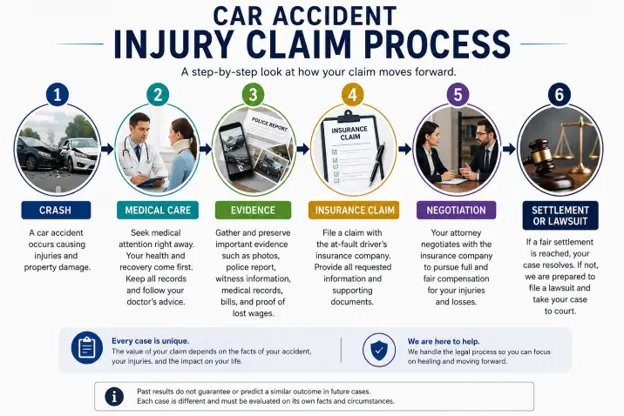
A car accident injury claim is not simply a bill for the doctor’s visit.
Think about what an injury can change.
Maybe you miss work. Maybe you need physical therapy. Maybe you cannot lift your child. Maybe you cannot do the job that pays your bills. Maybe the pain follows you into the night.
That is why the evidence matters.
Duff Goldman gives us a pretty good real-life example.
You probably know him from Ace of Cakes. In 2024, Goldman was injured in a crash in the Santa Monica Mountains after another vehicle allegedly crossed into his lane. His dominant hand was badly injured and needed stitches. That matters because Goldman makes his living with his hands.
He told Ana Calderone, a senior editor at People, “It definitely doesn’t work,” and then added, “I need it to, because that’s all I got.”
There it is.
The value of an injury is not always sitting on a hospital invoice.
For Goldman, a damaged hand could affect his work. For another person, a neck injury might make driving or sitting at a desk difficult. Someone who works in construction may have a very different loss from someone who works from home.
The injury is personal.
The claim should reflect that reality.
How Can a Lawyer Help?
This is where a car accident lawyer can become useful.
This is especially true when the crash involves serious injuries, disputed fault, multiple insurance policies, or losses that are difficult to calculate.
At Blair & Ramirez LLP, our Los Angeles car accident attorneys investigate collisions, identify potentially responsible parties, preserve evidence, deal with insurance companies, and pursue compensation for injured clients.
Why does that matter?
Because the insurance process is not simply, “Tell me what happened, and I’ll write you a check.”
After you report a claim, an insurer may ask for detailed information. It may take a written or recorded statement. It may contact other drivers and witnesses. If you are making an injury claim, it may ask for documentation of your medical expenses, injuries, and lost wages.
That does not mean you should panic when an adjuster calls.
It means you should pay attention.
And if you do not understand something, ask.
If you have a serious injury or a complicated claim, you can also get legal advice before making decisions that affect your case.
Why Should You Avoid Quick Settlements?
Because you may not know what the accident will cost you yet.
Think about this: You get into a crash on Monday. Your car needs repairs. You see a doctor. By Friday, the insurance company offers you money to make the problem disappear.
Tempting?
Of course.
But what happens if your pain gets worse? What if you need more treatment? What if you miss work? What if the first repair does not fix the car?
The California Department of Insurance says insurers investigate claims and must follow California’s rules for handling and settling them. It also says insurers may require documentation supporting the amount of a loss.
So, do not confuse fast with fair.
Those are different things.
There is another reason not to sit on a serious injury claim forever. California generally gives two years to bring a personal injury action under Code of Civil Procedure section 335.1. Other deadlines can apply in different situations, so the safe move is to get advice based on the facts of your case rather than relying on a general deadline.
The point is not to rush.
It is to avoid drifting.
How Do You Handle What Comes Next?
So, what happens after a car accident?
Usually, the scene gives way to a less dramatic but more important phase: medical care, vehicle repairs, insurance calls, paperwork, and decisions about a claim.
Your insurer may send an adjuster to investigate and evaluate the damage. California’s Department of Insurance says an adjuster may contact you for information about the loss and may investigate the circumstances of the accident.
Keep your records.
Medical bills. Repair estimates. Receipts. Pay stubs or other records showing lost income. Photographs. Police reports. Insurance correspondence.
Put them somewhere you can find them.
That sounds boring.
It is also incredibly useful.
And remember Tracy Morgan.
In 2014, Morgan survived a fatal crash that killed his friend and fellow comedian Jimmy McNair. Morgan suffered severe injuries and spent weeks in a coma. More than a decade later, Tina Fey told Entertainment Weekly that Morgan is “literally happy to be alive” and that his gratitude for life can bring him to tears.
We come back to Morgan here for a reason.
The accident may last seconds.
The consequences can last years.
That does not mean every car accident will change someone’s life in the way Morgan’s did. It means the aftermath deserves more attention than the few minutes spent standing beside the damaged cars.
Frequently Asked Questions
Key Takeaways
- Get safe first and call 911 when someone needs emergency medical care.
- Document the crash with photos, witness information, medical records, bills, and other relevant records.
- File an SR-1 when required. California gives you 10 days for qualifying crashes involving injury, death, or more than $1,000 in property damage.
- Do not confuse a quick settlement with a fair settlement. Understand your injuries and losses before agreeing to resolve a claim.
- Get legal help when the case is serious or disputed. Blair & Ramirez LLP offers free consultations for car accident victims.
The Crash Ends. Your Decisions Do Not.
A car accident can leave you with a damaged car and a lot more than a repair bill. You may have pain you did not expect, work you cannot do, medical appointments you never planned for, and an insurance company asking questions before you have figured out all the answers yourself.
So slow down.
Get medical care when you need it. Photograph the scene. Keep your records. Follow California’s reporting requirements. And before you accept a settlement or make a decision you do not fully understand, get advice.
If you are still asking what to do after a car accident, Blair & Ramirez LLP can help you sort through the next steps. Our attorneys offer free consultations and can review your situation, investigate the collision, deal with insurance companies, and pursue the compensation available under California law.
Contact Blair & Ramirez LLP to discuss your case.