


Do you love posting on social media? Maybe you share selfies, dinner pics, or fun videos from a birthday party? It seems harmless, right?
But hold on.
That innocent post could hurt your personal injury case more than you think. Surprised?
At Blair & Ramirez LLP, we’ve seen people wreck solid cases while lounging on their couches or waiting for a doctor. All it takes is one sneaky photo or quirky comment to raise eyebrows about your injuries.
What if a happy picture from a family trip is used to say you’re not really hurt? Curious about how this happens?
Let’s find out.
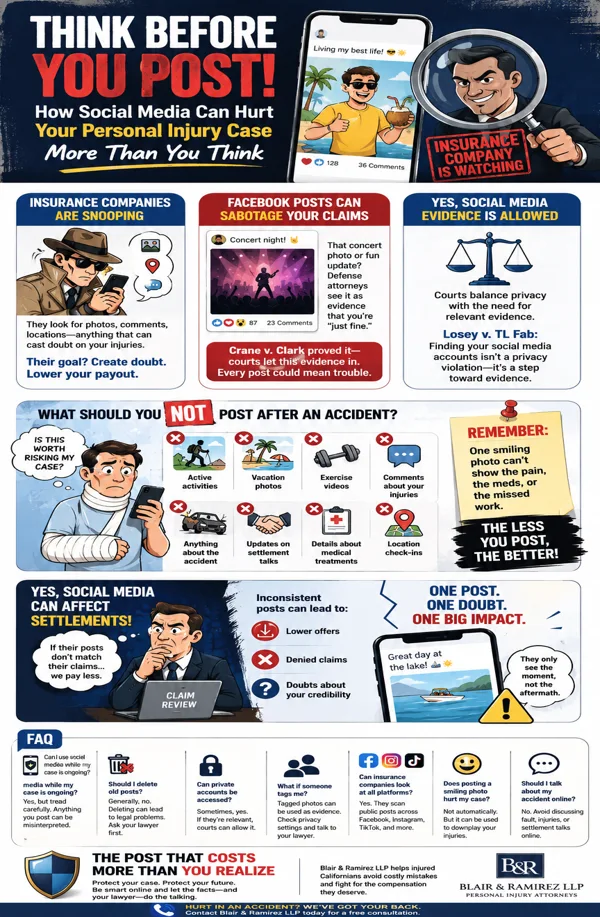
Why Do Insurance Companies Spy on Social Media?
Most people think insurance companies only check medical records and accident reports. Not true. They dig deeper. Insurance adjusters love to snoop through social media for juicy bits—photos, comments, locations, you name it.
Think of it like this: someone says they have terrible back pain after a car crash. But then, they post a photo from a family BBQ, just standing there, looking pain-free.
The insurance company could shout, “Hey. Look how healthy they seem.” Even if it isn’t true, those doubts can mess up your case.
So, why do they dig this deep? To create questions that might muddle your claim and negotiating power.
How Can Facebook Posts Sabotage Your Injury Claims?
Facebook feels like your personal diary, right?
But guess what? Defense attorneys see it as a treasure trove of evidence. A simple post can twist into something unexpected.
Say you share a picture from a lively concert. That might suggest you’re ready to party, not recovering from injuries. Even what your friends say can backfire.
In the case of Crane v. Clark, lawyers used Facebook posts to say the plaintiff’s claims didn’t match. The court let that evidence in. Shocking, right?
Every post could mean trouble, so think twice before sharing.
Is Social Media Evidence Allowed in Personal Injury Lawsuits?
Many people think their private social media accounts stay private.
Think again. The truth is a bit stickier.
Courts have to weigh your right to privacy against the need for important evidence. If social media posts connect to your injuries, activities, or even how you feel, they could come into play.
A California court highlighted this issue in Losey v. TL Fab. The court said just finding social media accounts isn’t a privacy invasion; it’s a necessary step for evidence.
So, just because you think no one can see your accounts doesn’t mean a court will agree.
That is one reason why understanding how social media can hurt your personal injury case is so important from the very beginning.
What Should You Not Post After an Accident
So, what’s the safest bet after an accident? Post very little.
Here’s a list of what to avoid:
- Pictures of you doing active stuff
- Fun vacation shots
- Exercise videos
- Comments about your injuries
- Anything about the accident
- Updates on settlement talks
- Details about medical treatments
- Location check-ins
Why be so careful? Because things online can look very different from what they are.
Think about it like this: You’re at your kid’s school play, and someone snaps a happy photo of you smiling.
A sneaky defense lawyer could claim, “Look. They seem fine.” But can one picture really show everything? No. It misses the pain, the meds, or the missed work.
The less out there, the better for your case.
Can Social Media Affect Injury Settlements?
Yes, it can.
Settlement talks depend greatly on how trustworthy you seem. If the other side sees posts that clash with your injury claims, they might lower their offer or back out entirely.
Even harmless posts can be tricky. Let’s say you go to a birthday party for an hour but feel awful for the next two days.
What does social media show? Just that one smiling moment. Not the pain afterward.
That missing information can really skew how insurance companies see their payouts.
So, we like to remind people that every public share could lead to misunderstandings.
How Can One Post Change Everything?
Most people don’t lose their case due to a bombshell mistake. It’s the little slip-ups that add up.
A photo here, a cheeky comment there, a friend’s video—it all forms a bigger story. And trust me, in personal injury cases, stories matter.
Decision-makers want to know: Do they believe the evidence? Do they trust the injured person? Social media adds another layer for people to question that trust.
So, understanding how social media can hurt your case isn’t about looking silly; it’s about safeguarding your claims.
Frequently Asked Questions
The Post That Costs More Than You Realize
Your personal injury case should hinge on real facts and solid medical evidence. But social media can mess up that process. One picture can raise eyebrows. One comment can sow doubt. And one post can give the insurance company a new angle.
If you’ve been hurt and are seeking compensation, protecting your case starts way before you step into a courtroom. It starts with what you share online every day.
At Blair & Ramirez LLP, we help injured Californians navigate these tricky waters and avoid blunders that could weaken valid claims. If you have questions about your case or worries about your social media, reach out to our team today. We’ve got your back with strategies to help you get the compensation you deserve.