


TL;DR
A bus trip should end with memories, not a trip to the emergency room. A charter tour and private bus accident lawyer can help explain what went wrong, who may be responsible, and what legal options an injured passenger may have.
Travel can be fun. You pack a bag, grab your phone, climb onto a bus, and go.
That is what people expect, right?
But what if the bus driver speeds through traffic? What if the driver looks at a phone? What if the bus has a bad tire or a brake problem? What if another car hits the bus?
Suddenly, the fun trip is not so fun.
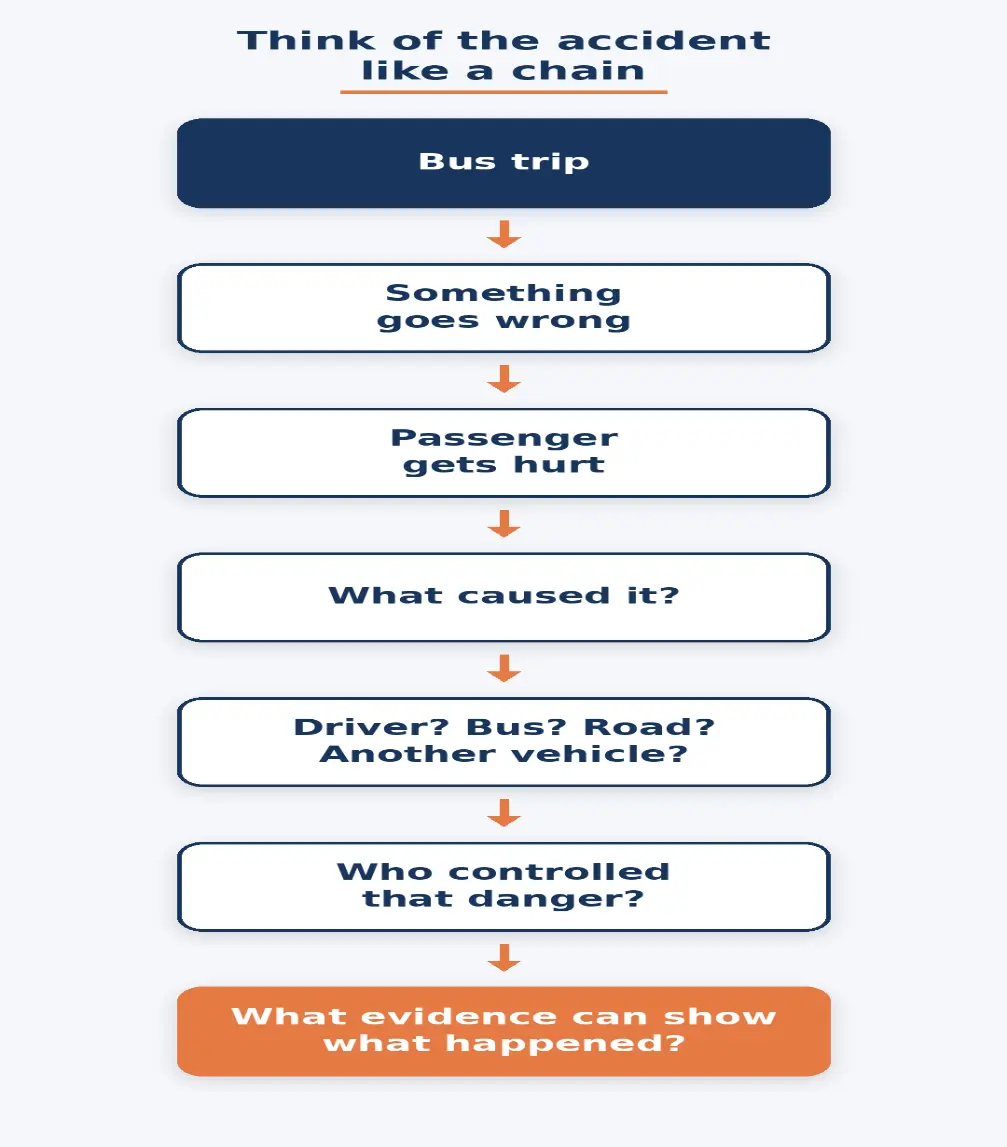
A charter tour and private bus accident lawyer looks at those questions after someone gets hurt. Was the driver careless? Did the bus company do its job? Did someone know about a safety problem and ignore it? These questions can matter when an injured passenger wants to understand their rights.
A Fun Bus Trip Can Turn Into a Serious Problem
Think about a family taking a sightseeing bus around California.
Everyone is laughing. Someone is taking pictures. A child is looking out the window. Then the driver brakes hard.
A passenger falls.
Maybe the passenger breaks a wrist. Maybe someone hits their head. Maybe an older person suffers a serious back injury.
Who is responsible?
That answer is not always simple.
The driver might have made a mistake. The bus company might have failed to maintain the bus. Another driver might have caused the crash. A road problem might also have played a part.
So where do you start?
You start with what happened.
California law requires people to use reasonable care when their actions could hurt someone else. The California Supreme Court discussed this basic idea in Kuciemba v. Victory Woodworks, Inc. (2023). The Court looked at when a person or business has a duty to protect others and how courts should think about things like risk, harm, and whether an injury could have been expected.
Put simply: Could someone have seen the danger coming? And could they have done something reasonable to prevent it?
Let’s say a bus company knows that one of its buses has bad brakes.
It sends the bus out anyway.
The brakes fail.
That raises very different questions from a crash caused by something nobody could have seen coming.
Who May Be Responsible for a Bus Crash?
This is one of the first questions people ask.
And it makes sense.
You were sitting in a bus. You were not driving it. So why should you have to figure out who caused the problem?
The answer may involve more than one person or company.
A charter bus accident lawyer may look at:
- The bus driver
- The bus company
- The tour company
- A company that repaired the bus
- Another driver
- A public agency responsible for a road
- Anyone else whose actions may have caused the injury
Here is a simple example: A tour company hires a bus company for a weekend trip. The bus driver speeds. The bus crashes. Several passengers get hurt.
Was the driver responsible?
Maybe.
Could the bus company also face questions?
Possibly.
Could the tour company have a role?
That depends on what it did and what it knew.
California law does not simply ask, “Who was behind the wheel?”
It asks harder questions:
- Who had control?
- Who knew about the risk?
- Who could have prevented it?
Those answers can change from one accident to another.
What If the Road Caused the Problem?
Sometimes the driver is not the whole story.
Think of a bus traveling down a busy California road.
There is a sharp turn ahead. The road is hard to see. Warning signs are missing. The driver takes the turn, the bus leaves the road, and passengers get hurt.
Now what?
Was the driver careless?
Maybe.
But was the road also unsafe?
That question matters.
The California Supreme Court looked at a similar issue in Tansavatdi v. City of Rancho Palos Verdes (2023). The case involved a dangerous roadway condition and the city’s duty to warn about a danger. The Court explained that certain legal protections for road design do not always protect a public agency from a claim that it failed to warn people about a known danger.
What does that mean for a bus passenger?
It means the road may deserve a closer look too. Maybe:
- There was poor lighting.
- A warning sign was missing.
- Construction changed the road.
- The bus driver could not see danger until it was too late.
A tour bus accident attorney may need to ask questions about all of these things.
What Evidence Can Tell the Real Story?
After a crash, everyone may remember it differently.
One passenger says the bus was speeding.
Another says the driver was looking down.
Someone else says the bus suddenly swerved.
Which person is right?
Maybe all three saw part of the story.
That is why evidence matters.
The California Supreme Court discussed important parts of negligence claims in Downey v. City of Riverside (2024). The Court explained that a negligence claim generally turns on questions such as duty, breach, causation, and harm.
In simple terms, a person must show more than the fact that something bad happened. The facts must connect the other person’s conduct to the injury.
So, what could help?
- A photo of the bus.
- A video from a passenger’s phone.
- A medical record.
- A police report.
- A witness who saw the crash.
- A bus maintenance record.
- Even a ticket or booking email can help show who operated the trip.
Think about a passenger who feels fine right after a crash.
Two days later, their back starts hurting.
Would the medical record matter?
Absolutely.
Would the passenger’s memory matter?
Yes.
Could a photo from the crash scene matter months later?
It could.
Small pieces of evidence can help tell the bigger story.
What If You Signed a Waiver?
Here is another common question: “But I signed a waiver. Does that mean I have no case?”
Not always.
A waiver is an agreement. But not every agreement can erase every legal right.
The California Supreme Court looked at this issue in Whitehead v. City of Oakland (2025). The Court examined California law that limits certain agreements that try to avoid responsibility for negligent violations of duties meant to protect public safety. The decision shows why the exact words of a waiver matter, along with the type of duty and the facts of the accident.
So, let’s say you book a tour online.
Before paying, you click a box that says you agree to certain terms.
Months later, the bus crashes because of a serious safety problem.
Does that one click answer every legal question?
No.
What did the waiver say?
What kind of claim do you have?
What caused the crash?
Those details matter.
A private bus accident lawyer can review the language and the facts and explain what the waiver may mean.
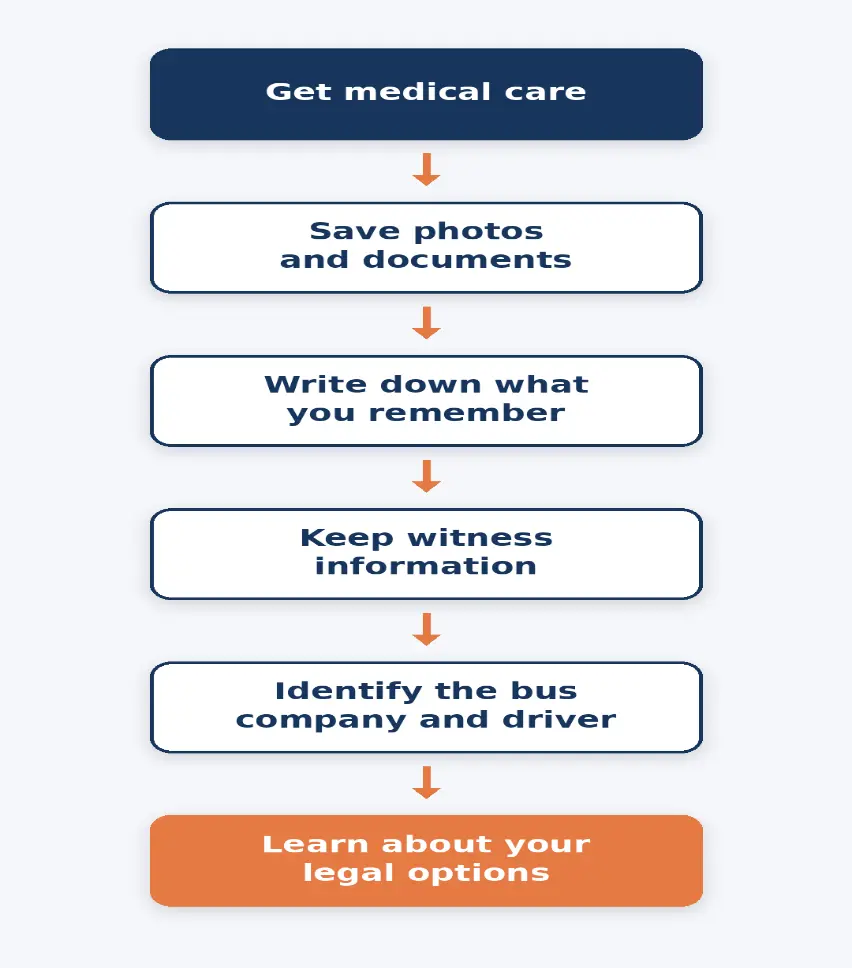
What Should You Do After a Charter or Private Bus Crash?
First, take care of yourself.
If you are hurt, get medical care.
Then ask yourself a few simple questions:
- Did you take pictures?
- Did you get the names of witnesses?
- Do you still have your ticket?
- Do you know the name of the bus company?
- Did you receive medical records?
- Did you report the accident?
Try to keep those records in one place.
Let’s say you were on a private bus when it crashed. You take three pictures before leaving. You save your ticket. A passenger gives you their phone number. You also keep the medical bill from the hospital.
Those simple records may help later.
The basic steps look like this:
Key Takeaways
- A bus crash may involve more than one responsible party. The driver, bus company, tour company, another driver, or even a public agency may need to be examined.
- The cause of the crash matters. Speeding, distracted driving, poor maintenance, unsafe roads, and other problems can raise different legal questions.
- Evidence can make a big difference. Photos, videos, medical records, witness names, tickets, and bus records can help show what happened.
- A waiver does not always end the discussion. The exact language and the facts behind the injury matter.
- After a crash, focus on your health and your records. Medical care comes first, but keeping important evidence can also help explain what happened later.
Frequently Asked Questions
A Bus Ride Should Not Leave You Wondering Who Will Pay
You got on the bus because you wanted to get somewhere.
Maybe you were going on vacation. Maybe you were taking a tour. Or maybe you were headed to a game, wedding, concert, or family event.
You did not expect to leave the bus in an ambulance.
And now you may have questions:
- Who caused the crash?
- Who should pay for your medical care?
- What happens if the bus company blames the driver?
- What if another car caused the crash?
- What if you signed a waiver?
These are not small questions. They can affect your health, your money, and your future.
Blair & Ramirez LLP can help you understand your legal options after a charter, tour, or private bus accident. Contact Blair & Ramirez LLP today to request a free case review and discuss what happened.