

TL;DR
Uber’s safety features, like RideCheck, trip sharing, and that handy Emergency Assistance button, boost your ride safety, but they can’t stop every mishap. Stay alert, stick to safety basics, and know your legal rights for those rideshare bumps in the road.
Have you ever felt a tiny sense of relief when your Uber pulls up? You check the license plate, the driver’s photo looks like the one on your app, and your route appears. Everything seems hunky-dory. But do we stop to think about safety?
Rideshare apps have become our trusty sidekicks. We call them after concerts, during airport trips, or when our cars decide to take a break. We rely on technology because it feels so familiar. But do Uber safety features really keep us safe, or are they just there to help after something bad happens?
At Blair & Ramirez LLP, we’ve heard stories from people who suddenly found their ordinary rides turning into wild journeys. Some faced injuries in crashes. Others found themselves in alarming situations they never saw coming. Almost every client says the same thing: “I thought the app would protect me.”
The truth is a mixed bag. Uber boasts several handy safety tools, but no app can beat common sense, careful driving, or accountability when things go sideways. Understanding how these features work (and knowing their limits) helps us make smarter ride choices.
Why Uber Safety Tools for Passengers Matter
Uber has spent a lot of time making features that let riders take control of their trips. That’s great news! But here’s the catch: You need to know these tools exist before you need them.
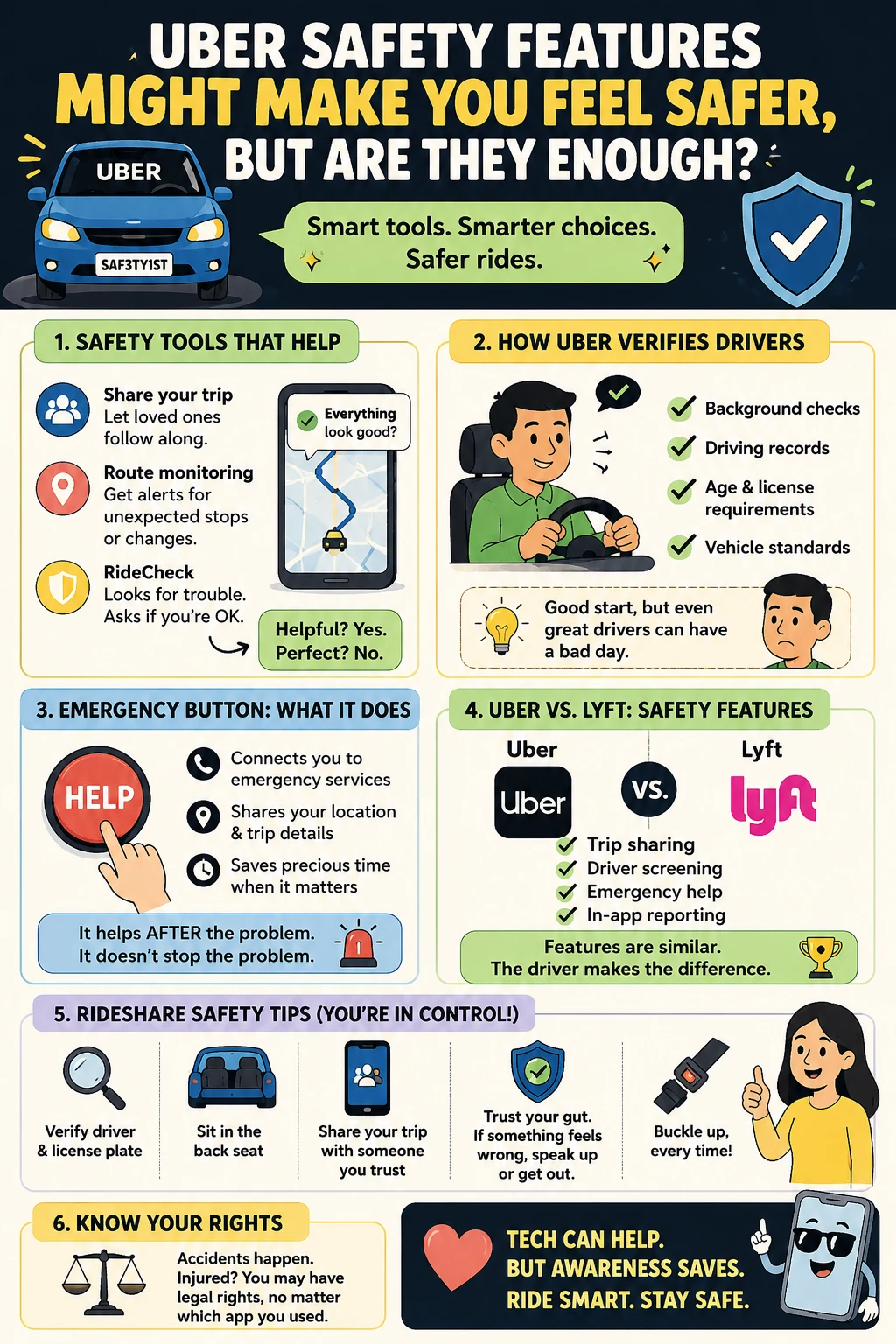
One super useful feature lets you share your trip with close family or friends. Let’s say it’s late at night, and you’re heading home. Instead of texting updates every few minutes, someone you trust can follow your ride in real-time. It’s like having a safety buddy without them sitting next to you.
Uber also helps track if your driver sticks to the route. If the car stops for way too long or suddenly changes direction, it sends a notification asking, “Hey, everything okay?” Then there’s the magical tool called RideCheck. It watches for signs of trouble, like a possible crash or unusual stops. If something seems off, the app prompts both the rider and driver to confirm their safety.
Can these features make you feel confident? Yes. But they’re not foolproof. They rely on technology, GPS signals, and users acting on alerts. If someone ignores a warning or loses cell service, those tools might not save the day.
That’s why, before every ride, take a few simple steps. Check the driver’s name. Match the license plate. Confirm the vehicle before hopping in. Sit in the back seat if you can. These quick checks may take seconds, but can prevent major headaches down the road.
How Uber Verifies Drivers Before They Hit the Road
Here’s a burning question: How does Uber decide who’s fit to drive us around? Safety first, right?
Uber says they screen drivers before they hit the road. This screening usually includes background checks and reviews of driving records. Drivers must meet age, licensing, and vehicle requirements set by local laws. Sounds safe, right?
California even has its own rules to boost passenger safety while letting rideshare services zoom around the state. However, passing a background check doesn’t mean a driver will always follow the rules.
Think about it: A driver can have a perfect record for years and then get distracted by a pesky text. Someone can obey every traffic law for ages and then suddenly decide to dash through a red light. Safety is about more than just background checks; it’s about everything that happens on the road.
If a crash occurs because of someone’s careless actions, injured passengers might have legal rights, regardless of how squeaky clean Uber made their driver sound.
How Uber Emergency Button Works
Let’s say you’re riding home late one night. Suddenly, the driver acts weird, or another car collides with yours. Your heart starts racing. What’s the first thing you do?
Uber has designed the Emergency Assistance button exactly for those hair-raising moments. This nifty feature allows riders to quickly contact emergency services from the app. Depending on your location, the app might show your trip details to help first responders find you faster.
But remember, the emergency button isn’t a superhero cape. It doesn’t magically prevent harm, stop reckless driving, or dodge collisions. Instead, it connects you to emergency responders faster once trouble begins.
This brings us to a critical point in our ride-sharing adventures. In October 2025, a California jury ruled that Uber wasn’t liable in a major trial involving claims of driver sexual assault. The jury determined that Uber was taking reasonable safety steps in that case. But many other claims remain. This shows that every situation is unique, and outcomes can change dramatically based on the facts.
Just because certain safety features exist does not mean injured riders have no legal options. Every bump or craziness during a ride depends on its own specific facts. Questions about who acted irresponsibly, what safety measures were in place, and if they were reasonable play a huge role in the bigger picture.
So be warned: An app’s safety button doesn’t decide whether you have a valid claim. The law digs deeper than just the icons on a screen.
Are Lyft Rider Safety Features Better Than Uber’s?
Got a question? How do Uber and Lyft stack up regarding safety features? Maybe you’ve opened both apps before calling a ride. The prices look the same, and the wait times barely differ. So why should you worry about safety?
Both Uber and Lyft offer a bunch of similar safety features. Riders can share their trips, verify driver details, call for emergency services, and report concerns through the app. Drivers go through a screening process before accepting rides, too. Sounds like a tie, right?
But that doesn't mean one app guarantees a safer ride than the other. The big factor? The person behind the wheel. A responsible driver who follows traffic rules can make every ride safer than a reckless one, no matter which app they use.
In July 2025, a U.S. District Judge made a big ruling in the Uber passenger sexual assault case. The judge tossed out some fraud claims about Uber's advertising but decided that some product liability claims could move forward. This means that questions about missing safety features need to be looked into further. The law continues to examine whether rideshare companies should offer more than just basic safety tools.
These legal cases matter to every California rider. Safety features can help during a ride, but they do not erase a company’s legal duty to tackle known risks.
Why Rideshare Safety Tips for Passengers Still Matter
Technology is super handy, but your own habits are equally important. Think about the last time you ordered a rideshare. Did you check the license plate? Did you confirm the driver’s name? Did you peek at the route once the trip started?
These small actions take only a minute but can create a big impact. Here are some helpful habits to adopt every time you ride:
- Verify the driver's name, photo, and license plate.
- Wait indoors until your ride arrives when possible.
- Sit in the back seat.
- Share your trip with someone you trust.
- Trust your instincts. If something feels wrong, end the ride in a safe public place.
- Always wear your seat belt, even for short trips.
These aren’t hard steps. They’re simple habits that help reduce risks. Yet, even with every precaution, accidents happen. A driver may run a red light. A rideshare driver might get distracted while navigating. Bad road conditions can lead to crashes.
When things go wrong, passengers shouldn’t feel helpless just because they used an app to get their ride.
In October 2025, a jury found that while Uber did show some negligence in safety measures regarding a driver's sexual assault case, it wasn’t a key factor in the plaintiff’s injuries. This case highlights how important the details are for each lawsuit. What happened? What evidence is available? What laws apply?
That’s why talking to an experienced attorney after a rideshare accident or incident can be vital. A legal pro can help pick apart the facts instead of relying on assumptions about what an app can (or cannot) do.
Frequently Asked Questions
Your Ride Should End Safely, Not in a Courtroom
Most Uber trips end just as they should. You arrive, say thanks, and go about your day. That’s how it’s supposed to be.
But when an accident or serious situation twists your ride, a flood of questions replaces ease. Who’s to blame? Will insurance cover lost expenses? What now?
You shouldn’t have to answer all these questions alone. At Blair & Ramirez LLP, we assist injured Californians in understanding their rights and pursuing just compensation after rideshare incidents.
If you, or someone you love, has been hurt while using Uber or another service, reach out today. Our team is here to evaluate your case, explain legal options, and fight for the result you deserve.
Key Takeaways
- Uber packs in cool safety tools: trip sharing, RideCheck, route tracking, and an in-app Emergency Assistance button.
- Driver screening isn’t foolproof. Background checks help, but they can’t see into the future. Recklessness can’t always be predicted.
- Uber and Lyft roll out similar safety features, but remember: it’s the driver’s actions that really count, not just the app.
- Small habits make a big difference. Verify your driver, double-check the license plate, sit in the back seat, and share your trip to stay safe.
- If you find yourself in a rideshare accident, don’t sweat it. You’ve got legal rights, with or without the safety features, so knowing your options matters.