

TL;DR
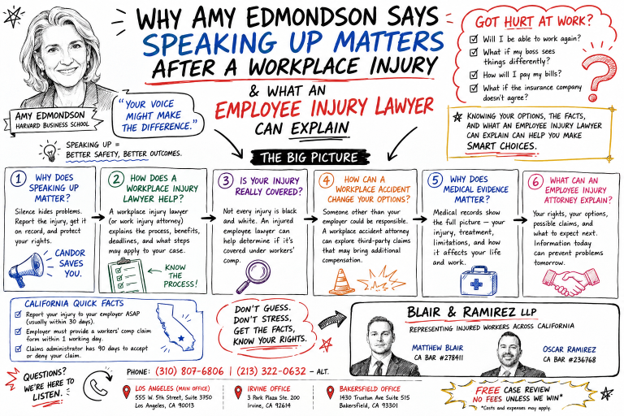
Getting hurt at work can stir up a whirlwind of questions, like “Will I be able to work again?” or “What if my boss sees things differently?” Knowing your options, the facts, and what an employee injury lawyer can explain can help you make smart choices about what to do next.
Getting injured at work isn’t just about the injury itself. It’s about what happens the next day (and the day after that).
Can you still do your job? Can your bank account handle missing work? What happens if the doctor says you need more check-ups? And what if your boss or the insurance company reads the accident in a totally different way than you?
That sounds like a lot.
Amy Edmondson, a brainy professor from Harvard Business School, studies why people feel scared to speak up at work. She shares some important ideas for people who’ve been injured. As she explained in a Harvard Business Review interview, psychological safety is not about making everyone comfortable. It is about “candor,” being direct, admitting mistakes, and asking for help when you need it.
Speaking up matters BIG TIME after an injury.
If a worker keeps quiet about a dangerous situation or an accident, they could be leaving out details that could change everything. In California, workers should tell someone about an injury as soon as they can, or they might miss out on important benefits later on.
So, what should someone who got hurt understand before making their next move?
Why Does Speaking Up Matter?
Let’s think about this: What happens when nobody says anything?
Think about a warehouse worker who slips on a wet floor but keeps on working. Or a construction worker feels a twinge in their back after lifting heavy stuff but just thinks, “It’ll be fine!” What about a delivery driver who crashes and worries that telling anyone will cause drama?
Maybe their pain goes away... but what if it doesn’t?
Edmondson’s research gives us a helpful way to look at this. In a Harvard Business Review interview (cited above), she explained that people often don’t speak up when they’re uncertain or fear what might happen next. She said leaders need to remind workers that “your voice might make the difference.”
This doesn’t mean every workplace injury leads to a legal battle, but it does mean keeping a good record of what happened is super important.
A workplace injury lawyer can help you figure out what facts might matter in your case. But first things first. Make sure you know the basics:
- When did the accident happen?
- Where?
- Who saw it?
- What symptoms popped up after?
- Did you need medical care?
California says employers have to give workers a compensation form within one working day after they find out about a workplace injury. It’s smart to keep a copy of that form, too.
How Does a Workplace Injury Lawyer Help?
This is where things can get a bit trickier.
A worker might think, “I hurt my leg at work,” but what’s the next step?
A workplace injury attorney can help explain how workers’ compensation works and go over the details of your injury. This includes things like the accident, your medical records, and how much work you had to skip.
In California, workers’ compensation can cover medical care, temporary disability money, and even help if you can’t go back to your old job. But these benefits won’t just show up without some effort.
Here’s the scoop: A claims administrator usually has 90 days to accept or deny your claim after getting that form. If nothing happens, it’s assumed your injury is covered.
What if they deny it? What if you can’t return to the same job? What if doctors disagree on your treatment? Those moments make knowing the process really, really important.
The key point? Not every injured worker follows the same legal path. But the facts? They are crucial.
Is Your Injury Really Covered?
This sounds like a simple yes-or-no question, but it can be a head-scratcher.
California’s workers’ comp system usually helps workers get benefits for work-related injuries without blaming anyone.
But what counts as a work-related injury? Think of a worker who develops back pain after doing the same heavy lifting over and over. There might not be one big accident; it could be a slow build-up to a problem.
Or, consider someone who gets hurt while running an errand for work. Or maybe someone dealing with equipment that breaks and causes an injury. Some workers feel fine right after an accident but then later experience serious pain.
Different details can raise different questions.
That’s where an employee injury lawyer steps in to help figure out if the situation fits under workers’ compensation or if there’s something else going on.
Edmondson’s work fits here again, but for a different reason. She found that cohesive hospital teams sometimes reported more mistakes than less cohesive teams. Why? They were often better at talking about mistakes.
That is a powerful idea.
So, when workers report an injury, it doesn’t create problems. It documents what’s happening.
How Can a Workplace Accident Change Your Options?
Now, here’s a question that might float by: What if your employer isn’t the only one responsible?
That’s an important thought.
Think about a construction worker who gets hurt because of faulty equipment from another company. Or a delivery driver has a mishap caused by a car that’s not theirs. Or maybe someone faces an injury due to some dangerous conditions on someone else’s property.
Workers’ compensation might cover some of it, but there could also be a chance for a third-party personal injury claim.
That’s where a workplace accident attorney digs deeper to see who else might be to blame.
Who owned that tricky equipment? Who made sure it was safe? Was another company linked to the accident? Some workplace accidents could involve both types of claims.
Remember, workers’ comp doesn’t usually cover pain and suffering. But a separate third-party claim can (if the legal boxes check out). Just because you have a workplace injury doesn’t mean every path is the same. Asking questions and seeking help can open up new options.
So, keep those questions coming. What do you think you’d do if your accident involves someone else? It’s worth figuring out.
Why Does Medical Evidence Matter?
Injuries can be tricky.
Sometimes you can see a broken bone on an X-ray, but what about that chronic back pain or nerve damage? Those aches and pains aren’t always visible but can cause major issues at work.
That’s where medical evidence comes to the rescue.
In California, “permanent disability” means a long-lasting injury or illness from work that stops you from earning a paycheck. Doctors step in to evaluate the injury and help you figure out the benefits you might get.
But hold on. There are also temporary disability benefits. These kick in when an injury keeps you from doing your regular job while you heal. In this case, California says you can get some of your lost wages during your recovery.
So, what should someone who got hurt do with all this information?
- Keep your medical records like they’re treasure.
- Follow your treatment plan like it’s a map to recovery.
- Tell your doctors that it’s work-related, so it gets noted properly.
- Track any changes in what you’re feeling or any work restrictions.
These details help paint a clearer picture of your injury and its impact on your life.
An employee injury attorney can sift through that evidence and show how it links to your legal case. The goal isn’t to predict what happens next but to make sure you understand all the details before jumping to conclusions.
And that brings us back to Edmondson.
Her message about speaking up is worth using again here because medical evidence starts with communication. If a worker minimizes symptoms, leaves out important details, or stays silent about worsening pain, the medical record may not fully reflect what is happening.
Just like Edmondson said, “your voice might make the difference,” and now it’s all about explaining what happened after the injury.
What Can an Employee Injury Attorney Explain?
By now, the questions on your mind probably look a lot different.
Instead of just “I got hurt. What now?” it’s more like:
- Was the injury work-related?
- Was it reported the right way?
- What benefits can I get?
- What if my claim gets denied?
- Could someone else be responsible for the injury?
- What does the medical evidence say?
These are the kinds of questions a chat with a lawyer can help clear up.
Remember, a consultation doesn’t promise a specific result. It’s a chance for an injured employee to explain their situation and learn about available legal options.
Blair & Ramirez LLP helps people dealing with workplace accidents and injuries in California and offers free consultations.
Here’s the big takeaway: You don’t have to know all the legal answers before asking a question. Sometimes, the best first move is just understanding what the facts mean.
FAQs About Employee Injury Claims
Key Takeaways
- Report your workplace injury ASAP; you usually have 30 days in California.
- Workers’ compensation can provide medical care and benefits for workplace injuries.
- Some accidents might involve another party and bring up more legal questions.
- Medical records are super important in showing the nature and long-term effects of your injury.
- Remember what Amy Edmondson found: Being open and honest matters when things go wrong at work.
Sometimes the First Step Is Simply Speaking Up
A workplace injury can quickly turn a normal day into a whirlwind of questions like: What happened? Did I report everything? What medical care do I need? What benefits can I claim? Is someone else involved?
You don’t need to figure everything out on your own.
Amy Edmondson reminds us that speaking up isn’t about causing trouble. It’s about bringing important information to light. Her research shows how critical it is for workplaces to encourage honesty when there’s fear or uncertainty after someone raises a concern.
For someone who’s injured, it all starts with these simple steps: report the accident, get the right medical care, keep solid records, and learn about the legal options in California.
Blair & Ramirez LLP is here to help with workplace accidents and injuries and offers free consultations for anyone keen to explore their options.
Reach out to Blair & Ramirez LLP today for a chat about your legal choices after a workplace injury.