


TL;DR
Survivors often ask, “What are the time limits for filing a civil sexual assault case in California?” The answer varies based on the situation, but California usually gives extra time in certain cases. Knowing these limits can help you understand your rights and options.
Some decisions can wait.
Should you change jobs? Move to a new city? Buy a new car? Those choices can usually wait a week or a month.
But filing a civil sexual assault claim is different. After an assault, many survivors focus on healing and may not think about legal deadlines. They might worry if anyone will believe them. Days turn to weeks, and weeks to months, then the big question appears: What are the time limits for filing a civil sexual assault case in California?
At Blair & Ramirez LLP, we understand there isn’t one clear answer. California law allows survivors to pursue a claim, but it also sets deadlines that depend on each case’s details. Missing these deadlines might limit your options, even if your claim is strong. It’s important to know your rights so you can make informed choices when you’re ready.
How Does California’s Sexual Assault Statute of Limitations Work?
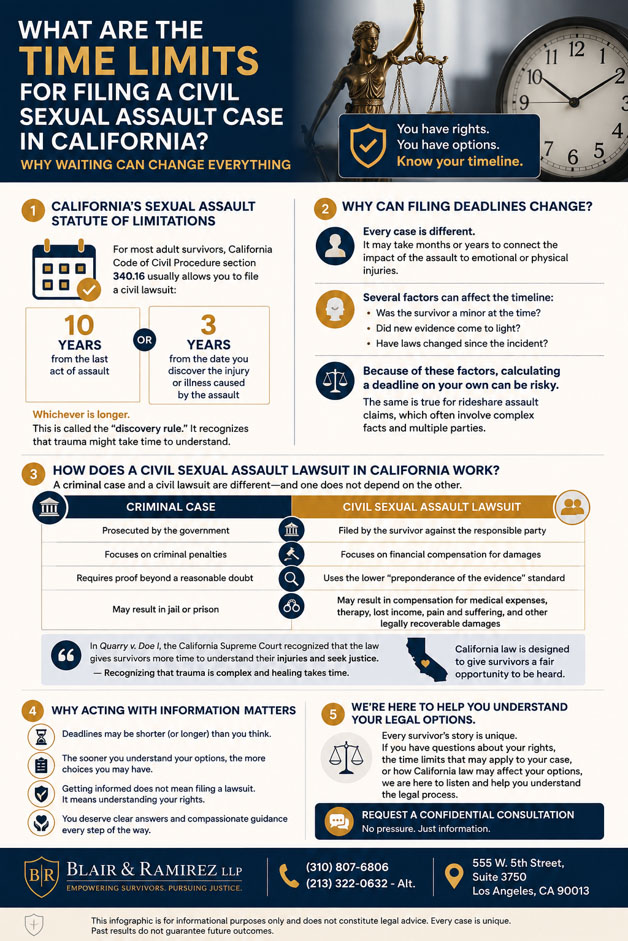
California gives survivors more time to file a civil sexual assault claim than many think. However, those timeframes aren’t unlimited. For most adult survivors, California Code of Civil Procedure section 340.16 usually allows you to file a lawsuit within 10 years of the last assault or within 3 years of realizing that the assault caused an injury or illness, whichever is longer. This is called the “discovery rule.” It recognizes that trauma might take time to understand.
Think about someone who is trying to live their life after an assault. They work, take care of their family, and try to move on. Months or years later, they might go to therapy and discover that their anxiety or depression comes from that traumatic event. The law allows for this delayed understanding.
Every case is unique. A survivor’s age, specific details of the assault, and even changes in California law can all affect the deadline. That’s why assuming things or following advice from social media can be risky. Checking the law itself is much smarter.
Why Can Filing Deadlines Change?
It would be easy if every case had a simple countdown: ten years or three years. But the law is not that straightforward.
Filing deadlines can change because every sexual assault case is different. One person might understand the assault’s impact right away, while another might take years to connect their struggles to the event.
That is why California allows more time in some cases.
Other factors can also affect the timeline. For example:
- Was the survivor a minor when the assault happened?
- Did new evidence appear later?
- Have laws changed since the incident occurred?
Questions like these can change when a civil claim can be filed. The answers depend on the specifics of each case and the laws in place.
That’s why figuring out the deadline on your own can be tricky. Articles online or advice from friends can’t always show how the law fits your situation.
The same idea applies to rideshare assault claims. Whether the assault involved a driver, another rider, or someone else connected to the ride, the filing deadlines can be complex. Checking the details early can help you see your available legal options.
How Does a Civil Sexual Assault Lawsuit in California Work?
Many people mistakenly think that a sexual assault case only goes to criminal court. But that’s not true.
A criminal case and a civil lawsuit serve different purposes, and one does not depend on the other.
California law makes this clear. Code of Civil Procedure section 340.16 expressly states:
“It is not necessary that a criminal prosecution or other proceeding have been brought as a result of the sexual assault or... that the prosecution or proceeding resulted in a conviction or adjudication.”
In simple terms, a survivor may still have the right to pursue a civil sexual assault lawsuit in California even if prosecutors decide not to file criminal charges or if a criminal case ends without a conviction. The civil justice system follows different rules and serves a different purpose.
|
Criminal Case |
Civil Sexual Assault Lawsuit |
|
Prosecuted by the government |
Filed by the survivor against the responsible party |
|
Focuses on criminal penalties |
Focuses on financial compensation for damages |
|
Requires proof beyond a reasonable doubt |
Uses the lower “preponderance of the evidence” standard |
|
May result in jail or prison |
May result in compensation for medical expenses, therapy, lost income, pain and suffering, and other legally recoverable damages. |
The California courts understand that survivors might need more time to realize the emotional injuries they suffered.
In Quarry v. Doe I, the California Supreme Court explained that they wanted to give survivors a better chance to seek justice when trauma affects their understanding of their injuries.
This explains why California has rules that recognize delayed discovery. Instead of assuming all survivors process trauma the same way, the law sees that emotional and psychological injuries might not show up right away.
How Can an Uber Sexual Assault Attorney Help?
Rideshare services like Uber have changed how we get around. Millions of people use them every day to travel to work, the airport, or home after a night out. Most rides happen without problems. But when a sexual assault happens during a rideshare trip, survivors face tough questions that go beyond just figuring out who is responsible.
For example, did the driver go through proper screening? Were there earlier complaints about the driver? Did the company do enough to protect passengers after learning about the assault? These questions matter in a civil case. It’s not just about what happened, but also if the rideshare company took reasonable steps to keep passengers safe.
There has been a lot of discussion on this topic lately. A recent investigation by the New York Times looked into how Uber defended some sexual assault lawsuits. They found that Uber sometimes tried to shift blame onto the survivors by discussing their clothing, drinking, or personal choices before the assault.
This led to a bigger conversation about accountability in rideshare cases. For many survivors, another question remains important: Do I still have legal options under California law?
Understanding your legal options starts with knowing the facts. Each rideshare assault case is unique. What evidence is available, the relationship between the people involved, when the claim is filed, and California’s deadlines all influence how a civil case can proceed. Analyzing these facts carefully can help identify the legal remedies available to survivors.
At Blair & Ramirez LLP, we think survivors deserve clear information about their rights, not pressure or assumptions. If you have questions about the time limits for filing a civil sexual assault case in California or how the law relates to a rideshare assault, a confidential consultation can help you understand your legal options.
Frequently Asked Questions
Key Takeaways
- California law gives survivors more time to file a civil sexual assault claim than many think, but the deadline depends on the specifics of each case.
- A civil lawsuit is separate from a criminal case, so survivors may have options even if no criminal charges were made.
- Rideshare sexual assault claims can involve various legal issues, including the actions of the alleged attacker and the rideshare company’s safety practices.
- Knowing your rights early can help you make informed decisions about the legal process and your options under California law.
Know Your Rights Before Time Decides for You
After a rideshare sexual assault, it’s normal to have many questions. You might not know how California law applies to your situation or whether you still have time to file a claim.
This confusion is understandable, but learning about your rights can empower you to make informed decisions when you are ready.
At Blair & Ramirez LLP, we believe every survivor deserves clear and compassionate guidance about their legal options. If you have questions about the time limits for filing a civil sexual assault case in California or how the law fits your situation, you can request a confidential consultation. Every case is different and should be evaluated based on its own details.