

TL;DR
Most personal injury settlements cannot be reopened once you’ve signed the release. But limited exceptions, like fraud, pressure, or a mutual mistake, may allow for legal action in rare cases. Before thinking your case is over, have an experienced lawyer review the details.
“Can you reopen a personal injury claim after settlement?”
This question seems simple, but many people ask it every year. Some realize their injuries are worse than they thought. Others find their settlement is not enough to cover their medical bills. A few just wonder if they signed too quickly.
We hear these concerns all the time at Blair & Ramirez LLP. And honestly? We get it. An accident can turn your life upside down. You may have medical appointments piling up while bills come in faster than your paychecks. When the insurance company makes a settlement offer, it might feel like a relief. But what if that relief doesn’t last? Can you go back for more money after settling?
Can a Settled Injury Claim Be Reopened
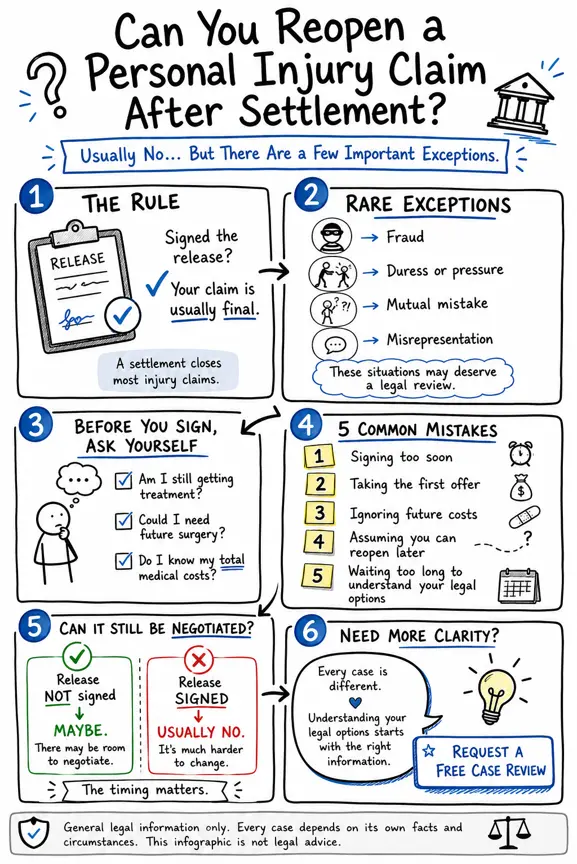
Most people hope the answer is yes, but usually, it’s no.
Once you sign a settlement agreement, you often give up your right to ask for more money for the same injury. That’s why insurance companies want you to sign before they send you a check.
Think about it. If you could reopen settlements again and again, would they really be final? Probably not. Both sides expect the case to be closed once the papers are signed.
But sometimes situations can change. What if you discover new injuries later on? What if you signed because you were misled? In rare cases, if the signing involved fraud or threats, a court might allow you to revisit the case, but these situations are not common. So, be careful when you sign.
A recent Reddit discussion showed this same concern. One user asked what happens after their personal injury case has settled. Another user, NotoriousKSG4, explained,
“Once the case is settled, the insurance company will generate a release and send it to your attorney for your signature.”
That detail is more important than many think. Hearing that your case has settled doesn’t mean everything is over. Before receiving your settlement check, you usually have to sign a release. Once you sign, you usually can’t ask for more money for the same injury.
That is why it’s crucial to ask questions before you sign, not after.
Why Was the Injury Settlement Too Low?
This question often comes up a few weeks later. The check has cleared, but you continue with physical therapy. The pain still bothers you. Reality sinks in. Maybe your surgery costs more than expected. Or maybe returning to work takes longer than you thought. Suddenly, that settlement doesn’t look so good.
We’ve seen people accept a low offer because they needed money for rent. Some accepted because the insurance adjuster said it was the best they could get. Many just wanted the whole process to end. These choices are understandable, but changing them later is tough.
Another Reddit user described negotiating with an insurance company instead of hiring a lawyer. They had injuries like whiplash and back pain and were waiting to start physical therapy when the adjuster settled the claim. One commenter offered simple but powerful advice: “If you’re still getting treatment, I would wait to settle.”
Notice the uncertainty in that situation. Should they accept the offer? Should they wait? Should they ask for more? These questions are important because once you settle, changing that settlement becomes very hard.
That’s why we encourage clients to think beyond just today’s bills. Ask yourself:
- What if your treatment lasts another six months?
- What if you can’t go back to your old job?
- What if your doctor says you need surgery next year?
These questions are not unlikely; they’re common. Once you sign the release, future costs can become your responsibility.
How Mistakes in Personal Injury Settlement Hurt
No one plans to make a mistake after an accident. Stress can make you rush decisions. Insurance companies know this and often take advantage. Here are some common mistakes:
1. Signing Too Soon
Feeling better isn’t the same as fully recovering. Some injuries take time to show their full impact.
2. Trusting the First Offer
Insurance companies rarely start with their best offer. It’s part of negotiation.
3. Ignoring Future Costs
Today’s emergency bill is just a small part of the entire picture. Think about rehab, specialists, medication, and lost wages. These can keep adding up long after the settlement check arrives.
4. Thinking You Can Reopen the Case
Many believe they can just call the insurance company if their health worsens. Usually, that’s not how it works.
5. Waiting Too Long to Talk to a Lawyer
Questions become harder to answer after signing. Legal advice is most helpful before fOne Reddit user worried about accepting a settlement before getting an independent medical check-up, fearing they would have to pay for care later. A commenter summed up the risk in a single sentence: “Settling before you even know the full picture is how people end up paying future care out of pocket.”
It’s a familiar story. People might not want to go to court. They just fear making the wrong choice. Understanding your rights before signing anything can make a big difference.
inalizing the settlement, not after.
How Legal Options After Injury Settlement Closed Still Exist
If you’ve signed a settlement agreement, don’t lose hope. While most settlements are final, not every option is closed. It’s important to know why you want to reopen the case.
- Were you misled?
- Did the insurance company hide key facts?
- Did you sign under pressure?
- Did everyone misunderstand your injuries?
These questions matter because they can change your legal options. Here’s a quick look at what might still be possible for reopening your case.
|
Situation |
Could You Still Have a Legal Option? |
Why It Matters |
|
You haven’t signed the release yet. |
Yes. |
A settlement usually isn’t final until the release is signed. |
|
The settlement was based on fraud. |
Possibly. |
Courts may set aside agreements obtained through fraud or intentional deception. |
|
You signed because of duress or coercion. |
Possibly. |
Pressure or unlawful threats may affect the validity of a settlement. |
|
Both parties made a serious mistake. |
Possibly. |
Some courts allow challenges based on a mutual mistake of fact. |
|
You simply changed your mind. |
Usually no. |
Regret alone rarely allows a settlement to be reopened. |
|
Your injuries became worse after signing. |
Usually no. |
Unless a legal exception applies, the release generally covers future complications. |
Noticing something important? Most exceptions to reopening a personal injury claim do not depend on how much money you got. They focus on how the settlement was reached.
That is why timing matters. The sooner you talk to a personal injury lawyer, the easier it is to see if one of these exceptions could apply to you.
Can a Lawyer Renegotiate an Injury Settlement
This question comes up often. The answer hinges on one key detail: Has the settlement become legally final?
If it hasn’t, there might still be a chance to negotiate. For instance, if the insurance company sends you a settlement offer by email and you agree verbally, but haven’t signed anything yet, what if your doctor finds a more serious injury during that time? Can your lawyer go back and try to get more money? Possibly. An experienced attorney might use your new medical records to explain how your situation has changed and could ask for a higher settlement before the agreement is final.
But what if you already signed the release? That situation is much harder to change. At that point, your lawyer’s job shifts. Instead of negotiating for a better deal, they need to find out if there’s a valid legal reason to challenge the agreement itself.
A recent Reddit discussion highlighted this uncertainty. One worker thought the case was almost finished until the insurance company changed its mind.
The poster explained, “The adjuster wants to fully reopen the case, saying they want us to settle for $1,000 less.”
At first, this sounds alarming. But notice what was really happening: the settlement wasn’t finalized yet. Both sides were still discussing terms, and no final agreement was in place.
In this case, the insurer wasn’t reopening a closed claim. They were just adjusting their position before things became official.
This distinction is crucial. Insurance companies can revisit negotiations for various reasons, but that doesn’t mean they can reopen a finalized settlement after you’ve signed a release.
If you’re unsure about your case, don’t guess. Ask someone. A quick review of your settlement documents can clear up confusion that has worried you for weeks.
The Best Time to Ask Is Before You Sign
Think back to the beginning. Why do so many people search for, “Can you reopen a personal injury claim after settlement?” Usually, it’s because something has changed: the pain might have worsened, more surgery might be suggested, or the settlement that seemed fair now feels too small.
These feelings make sense. But they also teach a key lesson: the strongest personal injury cases are built before a settlement, not after. This means you should fully understand your injuries, calculate future medical costs, document lost income, and make decisions based on facts, not pressure.
At Blair & Ramirez LLP, we believe each client deserves the time and information needed to make confident choices. If you’re thinking about a settlement or wondering if your situation fits one of the rare exceptions for further legal action, don’t assume it’s too late. Let us review your case, explain your options, and help you understand what California law allows. A quick chat today could save you from financial struggles tomorrow.
Frequently Asked Questions
Key Takeaways
- Most personal injury settlements become final after you sign a release.
- Regretting a settlement or finding out about higher costs later is usually not enough to reopen a claim.
- Fraud, pressure, and mutual mistakes are limited exceptions that might justify challenging a settlement.
- If you haven’t signed the release yet, your lawyer might still negotiate a better outcome.
- Speaking with a personal injury lawyer before signing any settlement agreement is the best way to protect your rights.
One Signature Can Change Everything
A settlement can bring peace of mind but also raise unexpected questions. Rushing into an agreement is rarely the best choice. If you’re asking, “Can you reopen a personal injury claim after settlement?” you’re already feeling uncertain. The good news is you don’t have to go through this alone.
At Blair & Ramirez LLP, we help injured Californians understand their rights before and even after a settlement becomes final. Whether you’re reviewing an offer or wondering if your situation qualifies for one of the limited legal exceptions, our team is ready to provide straightforward guidance for your unique case.
Don’t leave your future to chance. Contact Blair & Ramirez LLP today to set up a confidential case review and learn about the options that might still be available.