

TL;DR
A fake Uber driver assault can lead to lasting physical, emotional, and financial trouble. California courts are closely examining rideshare safety issues, and victims may have legal options depending on their specific situation. Talking to a knowledgeable attorney early can help gather evidence and protect your rights.
Have you ever hopped into an Uber without even blinking?
Most of us certainly have. You take a quick look at the car. Maybe you even glance at the license plate. The driver greets you by name with a friendly smile. You plop down in the seat, scroll through your phone, and ponder what’s for dinner or what time tomorrow’s meeting starts. It feels so routine thanks to rideshare apps making everything super simple.
But what if that friendly face behind the wheel isn’t your Uber driver at all?
Sounds like a scary movie plot, right? Well, it’s reality for some people across California who’ve encountered fake rideshare drivers. They lurk outside airports or shuffle near bars after closing time, waiting for unsuspecting riders. They know travelers might be tired, distracted, or just ready to get home. And guess what? They also know folks trust that glowing Uber logo like it’s a golden ticket.
But that trust can vanish faster than your favorite ice cream on a sunny day.
At Blair & Ramirez LLP, we’ve witnessed how quickly a normal ride can turn into a heart-pounding nightmare. A fake Uber driver attack doesn’t only leave bruises. It can rattle your confidence, shatter your peace of mind, and steal that cozy sense of safety long after the ride ends.
Who thinks they will ever be a victim? Not many. But understanding what happened, why it happened, and what legal options might be available can make a world of difference when the unexpected hits hard.
Why Is Fake Lyft Driver Assault Also Rising?
Let’s not forget that Uber isn’t the only rideshare service criminals target. Fake Lyft drivers play the same nasty game. Think of someone pretending to be a Lyft driver, luring a passenger into their car, and then committing theft, assault, or something even scarier.
So, why does this keep happening?
Think about a lively Friday night in Los Angeles. Hundreds of people are crowded around restaurants and music hotspots. Rideshare cars zoom in and out like busy bees. One driver calls out a common name like “Sarah” or “Michael,” and suddenly two people glance up. One gets in. That’s all it takes.
Criminals are sharp cookies. They know how people behave when they’re rushing to catch a ride. They also know that anyone showing a rideshare sticker often gets a free pass of trust.
But here’s where it can go off the rails. The driver might ask where you’re going instead of confirming your name. The car doesn’t match what’s on the app. The driver claims the app isn’t working and suggests paying in cash. These small but fishy details can easily slip past our radar, yet together, they hint at a dangerous trap.
No one should feel guilty for trusting what seemed like a legit rideshare vehicle. The blame clearly belongs to the person who chose to deceive and harm.
How Can Rideshare Driver Impersonation Turn Dangerous?
Rideshare impersonation isn’t just a sneaky way to snag a fare. Sometimes, it can take a horrifying turn.
Impersonators often latch onto passengers traveling alone. They stalk busy spots (airports, hotels, college campuses, concerts, you name it), where rideshare cars come and go like clockwork.
Think about leaving a huge sporting event swarming with fans. Your phone battery is almost kaput. A driver waves and cheerfully calls out, “Uber for Alex?” Would you stop to compare every single detail on your phone? Most people probably wouldn’t, right?
That’s precisely why these impersonation schemes can thrive.
The danger escalates when passengers feel secure as if they’re in the right vehicle. They may stop sharing their location with friends, put their phones away, and assume the path is correct—all because they trust the rideshare app.
Unfortunately, impersonators bank on that trust.
California law allows victims to fight back for compensation when someone else’s careless or wrong actions cause harm. Depending on what happened, the blame might even stretch beyond the impersonator if another party failed to put reasonable safety measures in place.
That crucial question (what safety steps were there, and were they enough?) has gained serious attention in courtrooms.
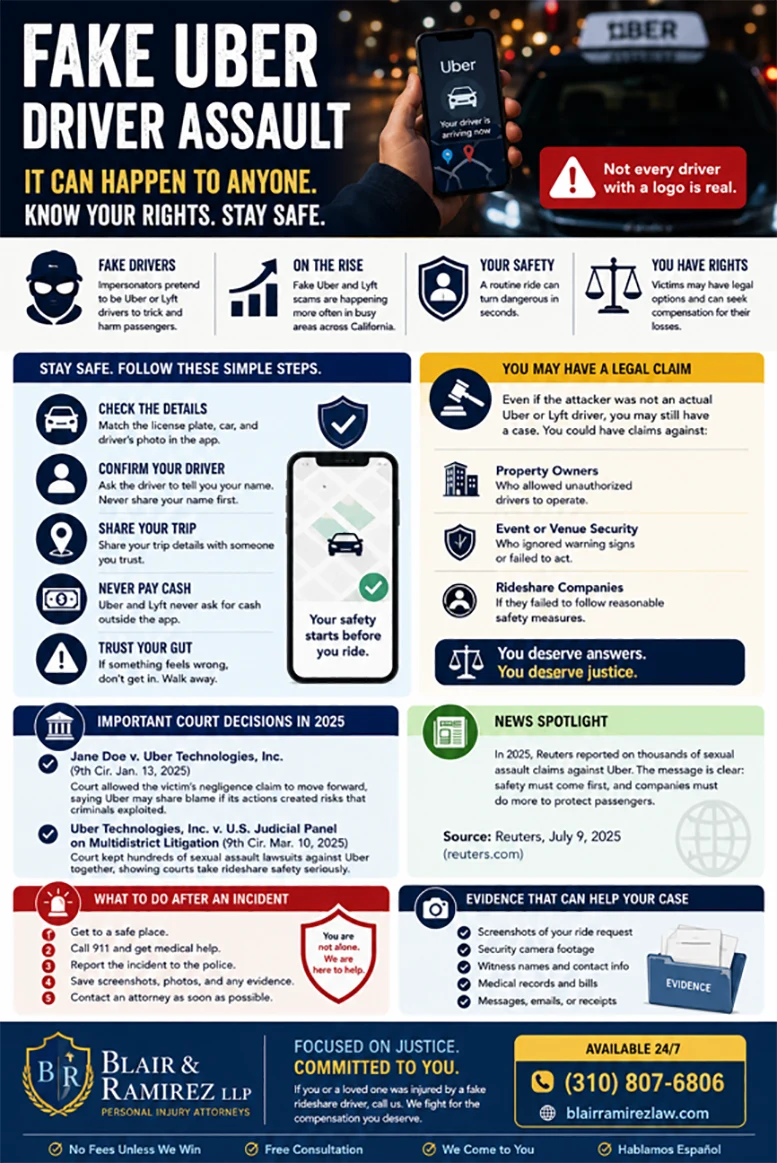
A recent decision shines a spotlight on this issue. In Jane Doe v. Uber Technologies, Inc., the Ninth Circuit Court of Appeals took a closer look at a woman’s claims when she alleged she was sexually assaulted after getting into a vehicle driven by someone using Uber’s platform. The judges scrutinized whether Uber could be held partly responsible for letting a suspended driver keep their Uber branding. Those details matter—recognizable Uber logos can create trust that criminals might exploit.
Each case has its unique story, but this decision highlights a vital rule: when dangers loom on the horizon, courts dig deep to see if reasonable steps could have stopped harm from happening.
Is Being Assaulted by a Fake Uber Driver Different?
Yes, and no.
The physical and emotional scarring can feel the same whether the attacker was a real Uber driver or just pretended to be one. But the legal angles can differ quite a bit.
One investigation might focus on finding the joker behind the mask. Another might ask whether someone turned a blind eye to warning signs before the assault occurred. Did a venue owner let unauthorized drivers hang out outside? Did security ignore a suspicious character pretending to be a rideshare driver? Were any past safety complaints swept under the rug?
Every answer holds weight.
Evidence counts, too. A screenshot of your ride request, security videos, witness accounts, medical documents, or even a receipt from a nearby diner can help piece the puzzle together.
Many survivors worry they lack proof because they escaped without snapping selfies or jotting down the driver’s license plate. That’s totally understandable. Trauma doesn’t mind making people feel flustered.
That’s why chatting with an attorney early on can help keep track of evidence before it fades away.
Is an Uber Impersonation Lawsuit Worth Pursuing?
Many survivors find themselves asking a big question: “What if the person who attacked me wasn't even a real Uber driver?” That’s totally understandable. The answer often hinges on the specific details of your situation. But don’t assume you don’t have a case just because the driver didn’t wear the official badge.
An Uber impersonation lawsuit isn’t just about tracking down the impersonator. It digs deeper into whether other players dropped the ball on keeping passengers safe. Did a venue let unauthorized drivers hustle for rides? Did a parking lot ignore repeated complaints about sketchy drivers? Did someone miss obvious security holes?
These questions matter. Negligence isn’t just about who caused the harm. Sometimes it’s about who had a chance to stop it.
Courts take these issues seriously. In a case called Uber Technologies, Inc. v. U.S. Judicial Panel on Multidistrict Litigation (2025), the Ninth Circuit Court of Appeals reviewed Uber's attempt to undo the merging of hundreds of sexual assault lawsuits into a single case in Northern California. A trio of judges—John B. Owens, Gabriel P. Sanchez, and Roopali H. Desai—said no to Uber’s request and let the coordinated lawsuits roll forward.
The court agreed that these lawsuits shared important questions about Uber’s safety measures, background checks, reporting systems, and how they protect passengers. Even though this action focused mainly on assaults by actual Uber drivers rather than impersonators, it showed a larger truth: rideshare companies can get serious scrutiny when safety problems happen repeatedly.
So, why does this matter for victims of a fake Uber driver assault? Because these cases encourage courts to ask tough questions about passenger safety, and whether extra precautions could help keep everyone safer.
While every lawsuit has its own story, the legal scene is shifting toward closely examining rideshare safety practices.
Why Is Fake Rideshare Scam Safety More Important Than Ever?
Technology makes getting a ride as easy as pie. Unfortunately, it also gives impersonators a leg up. A fake Uber sticker? Yes, it can be bought online. An impersonator can lurk outside a concert venue, eyeballing eager passengers hunting for their rides. They only need one distracted person to fall for their trick.
That’s why keeping some simple habits in mind is crucial. Before you hop into any rideshare vehicle, remember to:
- Check the license plate, not just the color of the car.
- Ask, “Who are you picking up?” instead of jumping in with your name.
- Compare the driver’s photo with the person behind the wheel.
- Share your trip details with a trusted friend.
- Trust your gut. If something feels off, don’t get in.
These steps won't stop every crime, but they can make it a lot tougher for impersonators to pull off their schemes.
Public awareness about these dangers is also on the rise. In June 2026, Reuters reported on ongoing lawsuits tied to thousands of sexual assault claims against Uber. While these lawsuits mostly spotlight alleged actions by actual Uber drivers rather than impersonators, they raise a common worry: passengers expect rideshare companies to keep them safe. The reports also echo growing public focus on background checks, identity verification, and other steps that can cut down risks in the rideshare world.
The takeaway is simple: Safety doesn't just stop when you book the ride. It kicks off the moment someone claims to be your driver.
Frequently Asked Questions
Don’t Let One Ride Define the Rest of Your Story
No one steps into a rideshare expecting to become a crime victim. But when a fake Uber driver assault happens, the emotional aftermath often sticks around far longer than the ride itself. Questions swirl. Medical bills start piling up. Sleep gets elusive. You might even find yourself wondering if anyone will believe your story.
You don't have to face those questions alone.
At Blair & Ramirez LLP, we believe every survivor deserves answers, support, and thoughtful legal guidance. If you or someone you love has been assaulted by a fake Uber driver or another rideshare impersonator, our team is ready to dig into the facts, explain your legal options, and fight for the compensation you truly deserve.
The ride might be over, but your journey to justice can kick off today. Reach out.
Key Takeaways
- Fake Uber and Lyft driver assaults often exploit trust, distraction, and impersonation, not just sheer force.
- Victims may have legal options even if the attacker wasn’t a real rideshare driver.
- Recent Ninth Circuit rulings show courts are paying serious attention to rideshare safety and negligence.
- Gathering evidence early can greatly strengthen a personal injury claim.
- A skilled California attorney can identify potentially responsible parties and pursue the compensation you deserve.