

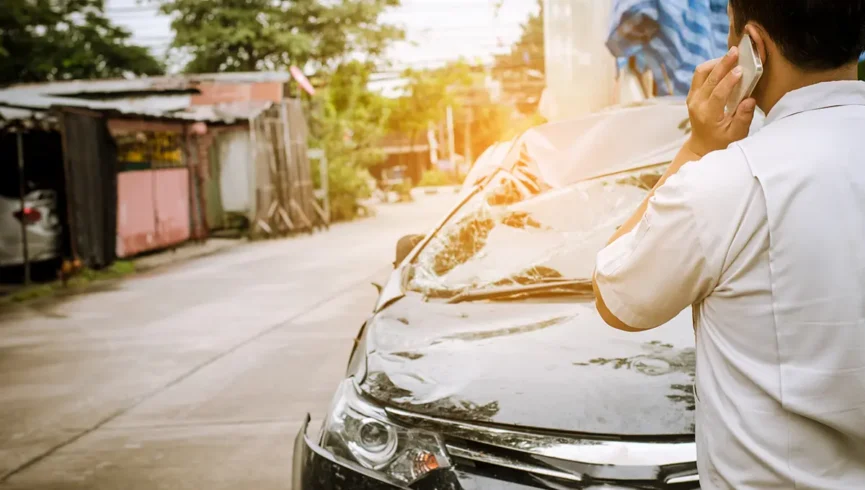
The other driver ran a red light. You know it. They know it. But without the right proof, the insurance company doesn’t have to know anything.
That’s how fast a solid claim falls apart.
Understanding what evidence is needed for a car accident claim isn’t just useful to know. It’s the difference between a fair settlement and walking away with far less than what your case is worth.
Here’s what actually matters, and why.
What Evidence Is Needed for a Car Accident Claim?
Your claim depends on documentation. Every piece of proof you collect answers one of three questions insurers ask about every case: Did the crash happen the way you say it did? Is the other driver responsible? How badly were you hurt?
The stronger your answers, the harder it is for an insurer to minimize your payout.
The police report is your foundation.
Call 911 at the accident scene, no matter how minor the situation seems. The police officer notes down the date, location, weather conditions, and witness statements. Adjusters use that report to understand how the accident happened.
According to the National Safety Council, insurance claims with police documentation resolve roughly 22% faster than those without. That’s not a coincidence. A police report locks in facts before memories fade and stories change. Without one, you’re asking an adjuster to take your word for everything.
One important note: police reports aren’t admissible as direct evidence in California civil trials due to hearsay rules. But they carry enormous weight during insurance negotiations, and your attorney can use every name, contact, and detail in that report to build a stronger case.
Medical records connect your injuries to the crash.
Insurance companies don’t take your word on how much you’re hurting. They look at medical records. Every ER visit, diagnostic scan, physical therapy session, prescription, and follow-up appointment tells adjusters how much the crash has affected your life.
Get checked out immediately after the accident, even if you feel fine. Adrenaline masks the pain. Whiplash injuries and concussions often don’t appear until days later. A gap between the crash and your first medical visit is exactly the kind of opening adjusters use to argue your injuries weren’t caused by the accident.
NHTSA’s Crash Injury Research and Engineering Network (CIREN) consistently finds that thorough medical documentation is one of the most critical factors in determining how injuries happened and what the long-term damage looks like. Without it, the medical cost of your injuries stays invisible on paper.
Photos and video capture what words can’t.
If you can do it safely, photograph everything at the scene. Vehicle damage from every angle. Skid marks. Road conditions. Traffic signals. Your visible injuries. The other driver’s license plate and insurance card.
Surveillance footage is just as valuable, and it disappears fast. Many businesses overwrite their security footage within 24 to 72 hours. Dashcam recordings from nearby vehicles can vanish just as quickly.
At Blair and Ramirez LLP, we act fast and send preservation letters to businesses before the footage is gone for good.
What Documents Do You Actually Need for a Car Accident Lawsuit?
When your case moves into formal negotiations or litigation, your attorney builds the demand around a complete evidence file. Here’s what that typically includes:
- Police accident report: the official third-party account of the crash
- Medical records and bills: every treatment record from the date of the crash forward
- Proof of lost wages: employer letters, pay stubs, time records showing missed work
- Photos and video: scene documentation, vehicle damage, and any surveillance footage
- Witness statements: names and contact information collected at the scene
- Expert reports: accident reconstruction analysis or specialist medical opinions for serious injuries.
- Your own written account: a detailed personal record of the crash, your symptoms, and how the injury has affected your daily life
Our California personal injury attorneys start building this file from the moment you contact us. The earlier that process begins, the more we can preserve before evidence becomes harder to recover.
What This Means for You
- A few offhand comments might not be enough, but repeated offensive targeting can be.
- The law now allows even a single extremely offensive incident to move forward if it’s severe enough.
- It’s not just what was said; it’s how it affects your ability to work.
If a coworker continually makes cruel comments about your religion, that can change your daily work attitude. If management ignores or dismisses this, the hostile work environment becomes enforceable under the law.
Our Advantage:
What Happens When Evidence Goes Missing?
Gaps in your evidence file weaken your case. They actively work against you. Insurance adjusters are trained to find inconsistencies in treatment and missing records. Every gap gives them a reason to question you.
No police report? The adjuster may argue the crash was minor or that the fault is unclear.
Delayed medical treatment? They’ll argue your injuries existed before the crash.
Missing photos? You lose the visual proof of what the scene actually looked like.
Evidence also has a shelf life. Surveillance footage gets overwritten. Witnesses forget details. Tire marks get washed away. Physical damage gets repaired. The window to capture that evidence is narrow, and it closes whether you’re ready or not.
How Does California’s Comparative Fault Rule Affect Your Evidence?
California follows a pure comparative negligence rule, meaning you can still recover compensation even if you were partially at fault for the crash. But your payout gets reduced by your percentage of responsibility.
Here’s why that matters for your evidence: the other driver’s insurer will look for any reason to shift blame to you. Unclear photos, a police report that’s vague on fault, or gaps in your medical timeline all become arguments for increasing your share of liability.
Strong, consistent evidence protects your percentage.
Blair & Ramirez LLP reviews police reports, medical records, crash reconstruction evidence, and witness statements to build the clearest possible picture of what happened.
Frequently Asked Questions
Get Your Evidence Reviewed Before It’s Too Late
You’ve seen how much evidence matters and how quickly it disappears. If you’ve been in a crash and aren’t sure what you have or what you’re missing, don’t wait to find out. Evidence has a short window.
Book your free case review today. We’ll listen to your situation, answer your questions, and explain your legal options.

Tell Us What Happened - We’re Ready to Help