

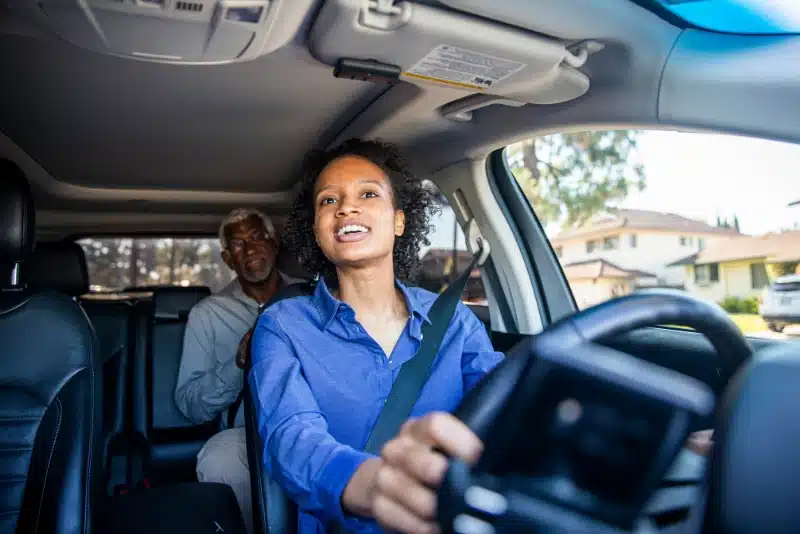
You opened an app and got into a car, trusting your safety to a stranger because a billion-dollar company said you could. Whatever happened inside that car isn’t your fault. You shouldn’t have to carry that burden alone, and it’s time for things to change.
Rideshare sexual assault claims are often overlooked, even though they’re a powerful legal option for survivors. Many people don’t realize they can hold the company accountable, not just the driver. Filing a police report isn’t always required, either. In California, rideshare companies have a legal responsibility to keep passengers safe, and courts have found that they’ve fallen short for years.
So, what does filing a claim look like? Who’s actually responsible? What kind of compensation can you expect? Let’s break it down together.
What Are Your Legal Rights After a Rideshare Assault in California?
California law doesn’t let rideshare companies hide behind the idea that they’re just neutral apps. Uber and Lyft have spent a lot of money trying to frame themselves that way, but California courts are seeing things differently.
According to California Civil Code Section 2168, any business that transports people for money is called a “common carrier.” Rideshare companies fit that definition. And under Section 2100, common carriers must use “the utmost care and diligence” to keep passengers safe. That’s a much stricter legal standard than regular negligence.
So what does this mean for you? Uber and Lyft can’t shrug off responsibility when a driver commits assault. They’re legally required to carefully vet, train, and keep tabs on their drivers. If they drop the ball and a passenger gets hurt, you can sue the company itself.
California courts backed this up in Acosta v. Southern California Rapid Transit District (1981), where a transit provider was found liable for not stepping in during a passenger assault. That same reasoning applies to rideshare companies. Once they choose a driver, put them on the app, and take your fare, they’ve created a legal relationship your attorney can use to push your case forward.
If you’re assaulted in a rideshare in California, you have the right to file a civil lawsuit for damages, the right to bring claims against both the driver and the company, and the right to keep your name out of public records. You don’t have to report the assault to the police for these rights to apply.
How Do You Actually Report Assault in a Rideshare? And Should You?
Let’s break this into two parts: reporting to Uber or Lyft, and reporting to the police. Both are important, but neither is required if you want to file a civil claim. Still, how you go about each one can shape your case.
Reporting Through the App
If you report the assault through the rideshare app, you create a documented record. When you submit a safety incident report to Uber or Lyft, the company has to keep that record on file. This documentation can become powerful evidence if you ever decide to sue. Even if the company ignores your complaint, the fact that you reported it, and the exact time you did, can make your case stronger.
Here’s exactly how to report assault in a rideshare app:
- For Uber: Open your trip history, pick the ride, tap “Help,” then select “Report a safety issue.” You can also call Uber’s Critical Safety Response Line at 1-800-353-SAFE.
- For Lyft: Go to your ride history, tap “Get Help,” then choose “Safety.” Lyft also offers a 24-hour Critical Response Line through the app.
Reporting To the Police
Reporting to the police creates a separate, official record. A police report can help your civil case, but many survivors don’t file one right away. Trauma, fear, and uncertainty are all real barriers, and the courts recognize that. If you didn’t report to law enforcement right after the assault, you can often do it later. Your civil claim can still move forward, with or without a police report.
One word of caution: don’t accept any settlement offer from Uber or Lyft before talking to a lawyer. These companies often reach out quickly, offering money that might seem substantial but is usually far less than what you could recover through a civil case. If you take their offer, you might give up your right to full compensation.
What Does the Research Reveal About Rideshare Passenger Safety?
The research and courtroom data both point to the same uncomfortable truth: rideshare passenger safety isn’t just about isolated incidents. It’s a widespread, persistent problem that companies have known about for years.
The most thorough peer-reviewed study on this issue comes from Dr. Heather Tillewein and Destiny Cox. Their work, published in November 2024 in the Journal of Interpersonal Violence, dug into safety reports from Uber and Lyft, examined each company’s prevention policies, and highlighted how underreporting makes things worse for survivors. They found that sexual assault rates are actually rising on rideshare platforms, that the numbers we see are way too low because most survivors don’t come forward, and that both companies’ background checks and safety measures have serious flaws. They also called for much more research, suggesting that what’s public is only a small slice of the problem.
Backing this up is a February 2024 report from the U.S. Government Accountability Office. The GAO looked at federal data, company disclosures, and industry practices. Their findings were stark: there are no federal rules forcing rideshare companies to track or share assault data, the numbers we do have barely scratch the surface, and in 2019 alone, just three companies reported about 4,600 serious sexual assaults. The GAO called for new laws and tougher safety standards.
Put together, all this evidence supports what survivors have been saying all along: the problem is bigger than the companies admit, and the legal system is finally starting to respond.
What Steps Should You Take Immediately After a Rideshare Assault?
The steps you take right after a rideshare assault can make a big difference in your legal case. Here’s what you should focus on:
- Make sure you’re safe. Your well-being comes first. If you’re still in the car, get out as soon as you can safely. If you need urgent medical help, call 911 right away.
- Save everything. Take screenshots of your ride receipt, the driver’s name and photo, vehicle details, and any messages exchanged in the app. These details can disappear or become hard to find later, so grab them as soon as you can.
- Write down what happened. Note the time, place, what was said, and any other details you remember. Your memory can fade quickly, but a written account made soon after the event carries a lot of weight if you decide to take legal action.
- Get medical care, even if you don’t see any injuries. A medical record not only helps your recovery, but it also documents the impact of the assault and backs up your claim for damages. Many survivors skip this step and later wish they hadn’t.
- Report the incident in the rideshare app. This creates an official record that the company has to keep. Do this before you reach out to customer support in any other way.
- Talk to a lawyer before speaking with Uber or Lyft. This is crucial. Once you have an attorney, all contact from the company or its insurance goes through them, shielding you from low settlement offers or statements that might hurt your case.
In California, you usually have two years from the date of the assault to file a personal injury claim. Some exceptions apply, like if the survivor is a minor or didn’t discover the harm right away. Two years can sound like plenty of time, but it often passes quickly, especially when you’re still trying to heal.
What Compensation Can Rideshare Assault Victims Actually Recover?
This is where many survivors are caught off guard. A civil claim isn’t limited to just the immediate harm. It covers the full impact on your health, your finances, and your life moving forward.
Compensation for rideshare assault victims in a successful civil claim typically includes:
- Medical bills: Emergency care, hospital visits, follow-ups, and any treatment you need down the line.
- Mental health support: Therapy, counseling, psychiatric care, and ongoing emotional support.
- Lost wages: Income you missed because trauma kept you from working, plus future lost earnings if the impact is long-lasting.
- Pain and suffering: For both the physical and emotional pain caused by the assault.
- Emotional distress: Separate from pain and suffering, this covers the psychological weight of what you went through.
- Punitive damages: If Uber or Lyft acted with extreme recklessness or disregard, courts can tack on extra damages to punish the company and warn others.
Case values vary significantly based on the facts and evidence. The first bellwether trial in the federal Uber MDL, completed in early 2026, resulted in a federal jury awarding $8.5 million in compensatory damages to a single survivor.
Punitive damages can push those numbers even higher, especially when it’s shown that the company knew about a dangerous driver but let him keep working.
Why Does California Law Give Assault Survivors a Stronger Position Than Most States?
California law gives rideshare assault survivors a stronger hand than just about anywhere else in the country, and that edge can make a real difference in your case.
First, California’s Civil Code Section 2100 sets a higher legal standard for rideshare companies. Instead of just asking whether Uber or Lyft acted “reasonably,” the law demands that they use the “utmost care” to protect passengers. That’s a tough bar to meet. These companies can’t just say they did enough; they have to show they did everything they possibly could.
Second, the main federal Uber sexual assault lawsuit is centered in California’s Northern District. At the same time, state-level cases are moving forward in California courts, with hundreds of claims specific to the state. Lawyers here get access to Uber’s internal safety records and communications, Information that’s not public but can be crucial for building a case.
Third, California courts have a history of holding transit companies responsible for passenger assaults, even when the attack came from a driver or third party. The legal precedent is stronger and more fully developed here than in most other states.
At Blair & Ramirez LLP, we know how overwhelming and isolating this process can feel. We keep our caseload intentionally small, so every survivor gets the personal attention they deserve. You’ll have advocates who listen, who believe you, and who fight for you every step of the way. Our team is available around the clock, we serve clients in both English and Spanish, and you’ll never face any upfront costs or legal hurdles alone. If you want to talk about your options, we’re here whenever you’re ready.
Frequently Asked Questions
The Clock Is Running. Your Rights Are Real.
California gives you two years to file, but that window won’t wait until you’re ready. Each day that slips by brings you closer to the deadline. Survivors who stepped forward built strong cases using ride receipts, app records, and their own stories. They stood up in court and made a billion-dollar company answer for what happened.
You don’t need a police report. You don’t need every detail memorized. What you do need is someone who will fight for you.
Your consultation is free, confidential, and comes with no strings attached. We’ll give you an honest answer about your situation.